This well-deserved award honors a lifetime of service to justice and renews hope for those who believe that every human being deserves dignity, protection, and accountability.
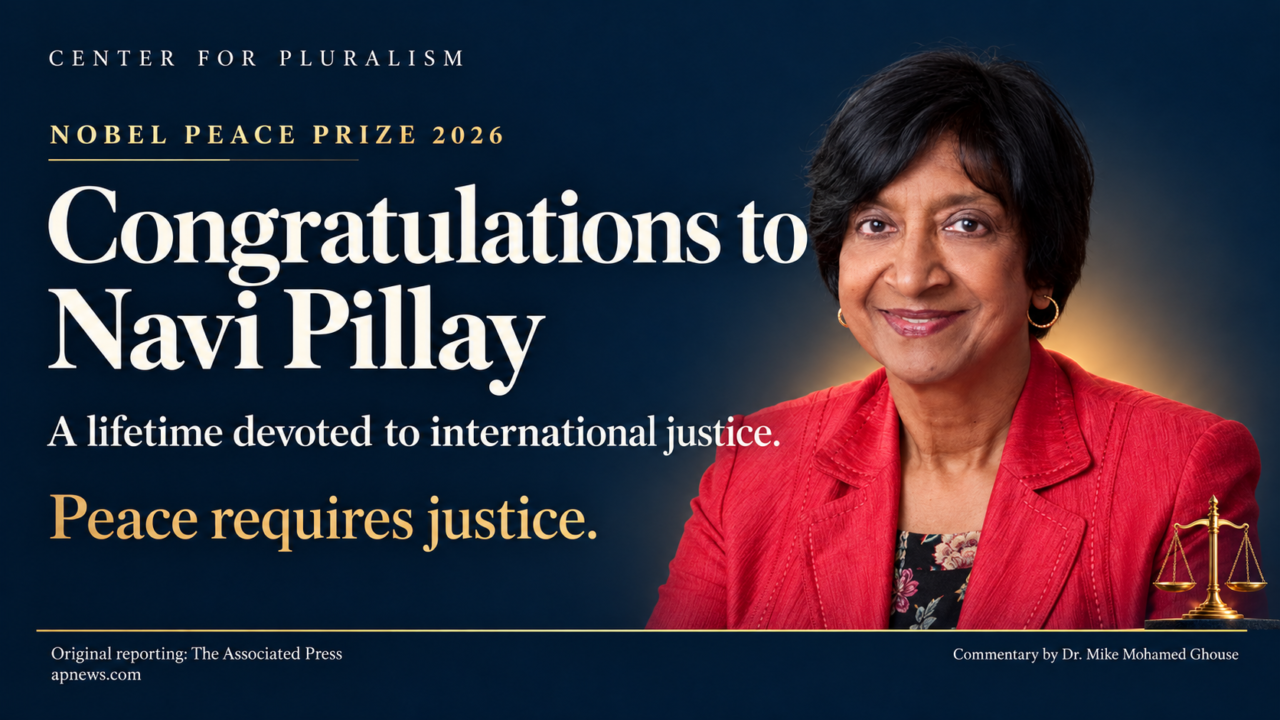
I am especially heartened to learn about Navi Pillay’s role in defending the rights of Nelson Mandela and other political prisoners, and her leadership in confronting the devastation in Gaza. As chair of the UN Commission of Inquiry, she helped bring international attention to the commission’s finding that Israel had committed genocide against Palestinians in Gaza—a conclusion Israel rejects.
We must do our best to bring reason and compassion into these conversations. We must unequivocally oppose antisemitism, Islamophobia, Hinduophobia, and homophobia. Our commitment to justice must embrace everyone.
I participate in several Jewish groups, although I have reduced my interactions in some of those spaces. Recently, I asked a respected Jewish friend, “What kind of humans are they who do not feel the pain of the Palestinians?” My friend reminded me of the atrocities committed against Native Americans and Africans.
That reminder was justified: we must confront the injustices in our own history. However, I felt it diverted attention from the suffering of Palestinians. One atrocity cannot excuse another. Acknowledging historical crimes should deepen our compassion for people facing injustice today.
I had hoped to hear stronger, more widespread opposition to the destruction in Gaza. Seeing some Israelis and some American Jews support or celebrate it has been deeply disappointing. At the same time, Jewish and Israeli voices courageously opposing the violence deserve recognition and solidarity. Our criticism must remain directed at those responsible, without assigning collective blame to an entire community.
The shortsighted actions of some Zionist leaders and supporters fuel hostility toward Muslims in general and Palestinians in particular, helping justify the appropriation of Palestinian land. I believe these policies also endanger the long-term security of Jewish people, undermining the very safety they claim to protect.
They must heed Jewish and Muslim leaders who advocate peaceful coexistence with their neighbors and reject territorial expansion and dispossession. Lasting security requires respect for the rights and dignity of both Palestinians and Israelis.
I am working on an article titled “The Good, the Bad, and the Ugly Scriptures.” It examines how religious teachings and interpretations have been used to uphold human dignity—and, at times, to justify discrimination. It is disheartening that we still allow inherited interpretations rooted in misogyny or homophobia to override our responsibility to protect human rights.
The Vedas, Avesta, Pali Canon, Torah, Agamas, Bible, Quran, and other foundational sacred texts offer wisdom about compassion, responsibility, and creating societies where people feel safe. We must bring that wisdom into our conduct.
Later interpretive and legal writings—including the Talmud, Hadith literature, Manusmriti, and Christian canon law—have distinct histories and roles within their traditions. Wherever passages or interpretations are used to justify cruelty, misogyny, or homophobia, they deserve honest examination. No appeal to religious authority should place human dignity beyond protection or harmful practices beyond scrutiny.
South Africa raised a powerful national and legal voice by bringing its genocide case against Israel before the International Court of Justice. Others have supported the pursuit of accountability, but the responsibility belongs to every nation. The United States and other influential countries must insist on the protection of civilians, including when those obligations concern their allies. Palestinian and Iranian lives deserve the same protection as all other human lives.
Against this backdrop, Navi Pillay’s Nobel Peace Prize is a morning star—a sign of hope for people living under oppression and leaders who act as though they are beyond accountability.
Justice is the foundation of cohesive societies in which every human being feels secure, regardless of who they are. Indeed, for me, the other name for religion is justice.
Dr. Mike Mohamed Ghouse
South African-born jurist Navi Pillay wins Nobel Peace Prize for her work in international justice
By STEFANIE DAZIO, JAMEY KEATEN and KOSTYA MANENKOV
OSLO, Norway (AP) — Navi Pillay, a South African-born jurist and former U.N. human rights chief whose career has spanned from defending the rights of an imprisoned Nelson Mandela to leading a panel that found that Israel committed genocide in Gaza, won the Nobel Peace Prize on Friday for efforts that the award committee said promoted international law as it comes under attack.
Her win is sure to be seen as a high-profile rebuke to U.S. President Donald Trump and Israeli Prime Minister Benjamin Netanyahu, who have both rejected the findings of the U.N. commission she led on Gaza. The leaders also have been highly critical of the International Court of Justice and the International Criminal Court. Pillay has worked at both.
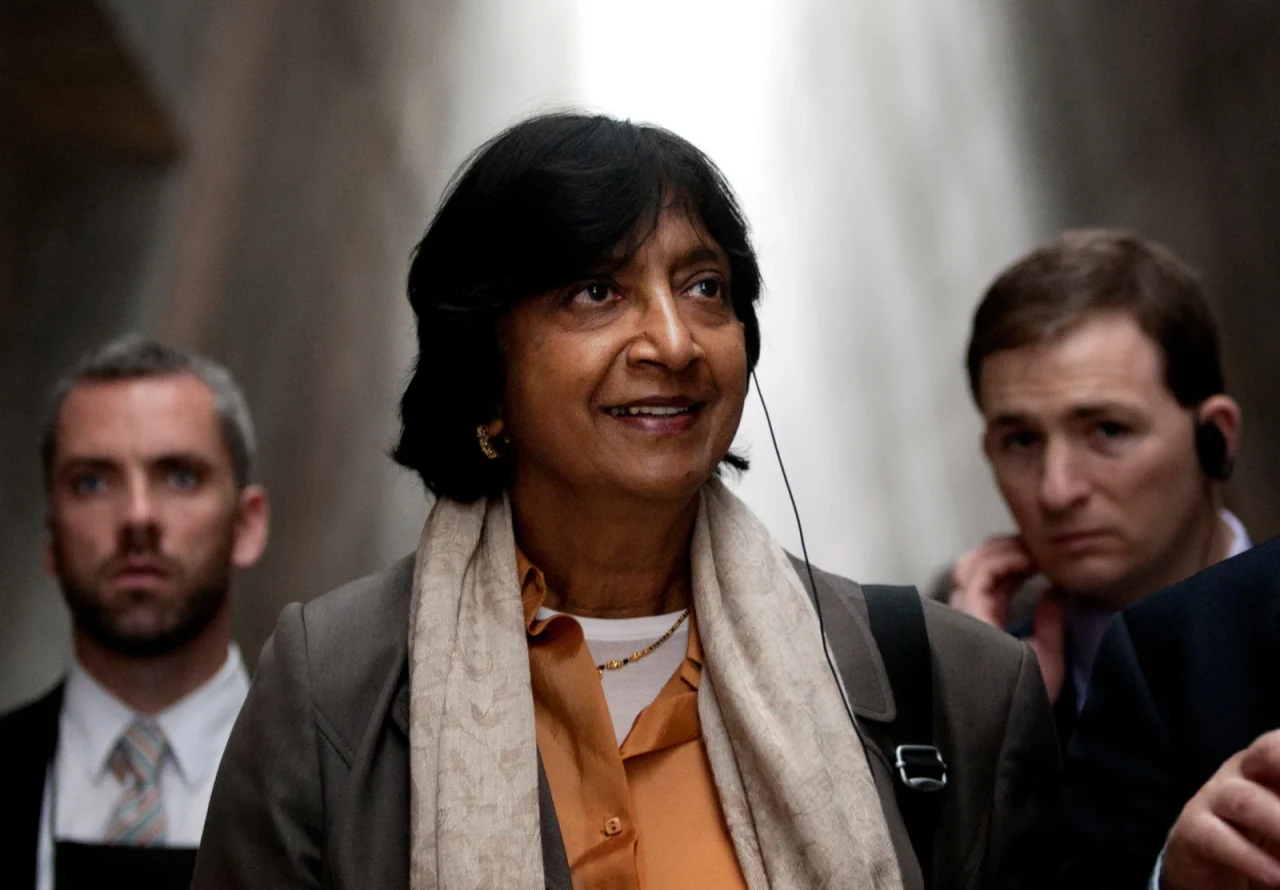
Hours after the award was announced in Norway, the Trump administration imposed sweeping new sanctions on the International Criminal Court as part of its campaign to dismantle the tribunal over investigations into the United States and its allies, including Israel.
Trump railed against the decision on Friday, claiming he deserved the prize and dismissing Pillay as “a liberal person who works at the United Nations who nobody has ever heard of.” He later said on social media that “she, very obviously, hates Israel.”
“The Nobel Peace Prize has been forever discredited by a handful of radical ideologues who are antidemocracy and really enemies of civilization,” Trump told a rally for Republican candidates in Syracuse, New York. “And we will not forget, Norway.”
On the 125th anniversary of the prize’s inception, the Norwegian Nobel Committee sought “to remind the world that the rule of law, national and international, underpins the system we have set up to ensure peace and resolve conflicts nonviolently. Peace requires justice,” committee Chairman Jørgen Watne Frydnes said.
Judges “guard the thin red line between order and chaos,” and the world needs jurists “of courage, vision and determination, qualities that Navi Pillay demonstrates in her work on the bench.”
In places such as Israel and in apartheid-era South Africa, she and peers took on some of the world’s most painful and sensitive legal issues and most vulnerable populations.
Pillay, 85, received the news while attending a forum in Nuremberg, Germany, where the trials of Nazi war criminals helped lay the foundations of international law. She was in the same room where the trials were held when the prize was announced.
She said efforts to weaken international criminal justice “endanger the progress painstakingly made since Nuremberg, and they risk returning us to a world in which power, rather than law, determines whose suffering matters.”
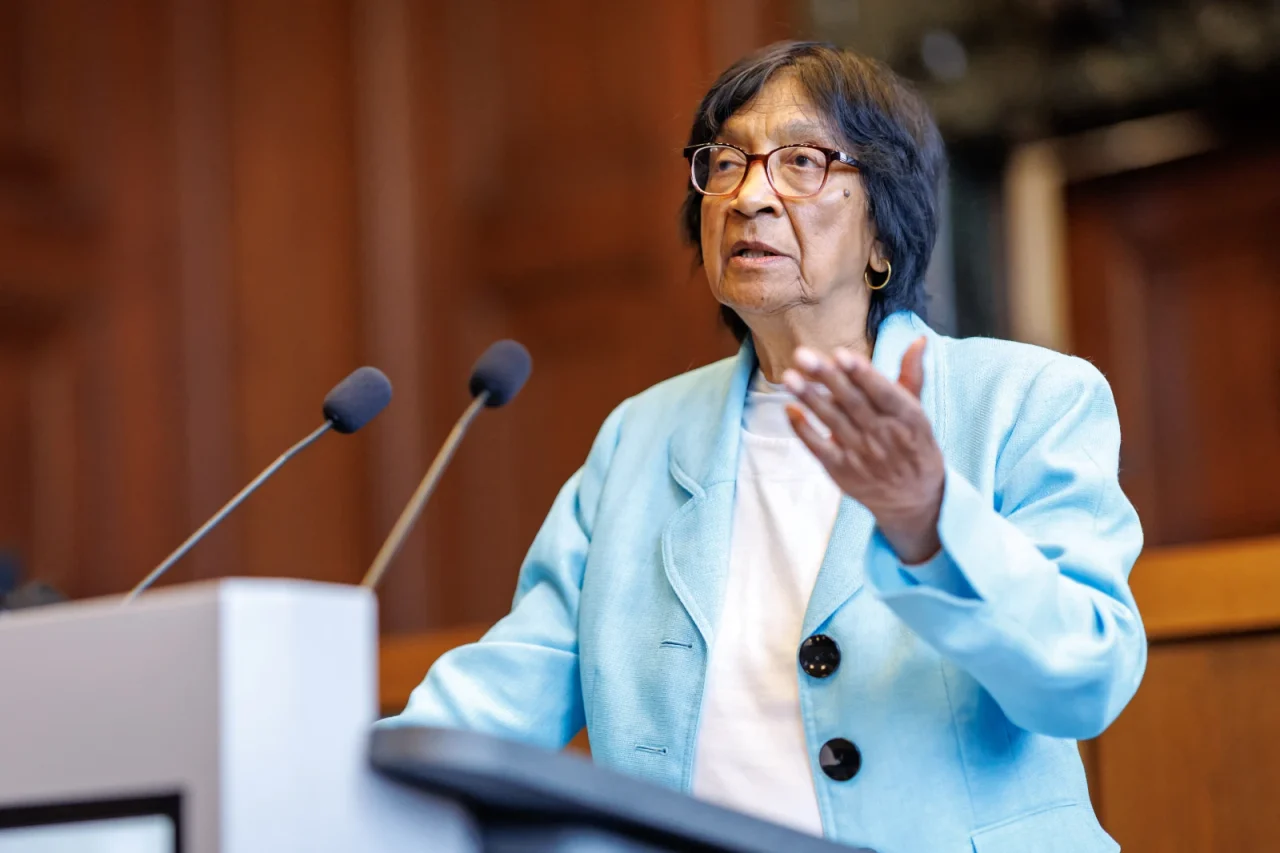
Winner led investigation that determined Israel committed genocide in Gaza
Pillay chaired the Commission of Inquiry on the Occupied Palestinian Territory and Israel, which was created by the U.N.-backed Human Rights Council. The commission a year ago concluded Israel was responsible for genocide in Gaza with a specific intent to destroy Palestinians in Gaza.
Gaza was among Pillay’s first comments Friday after hearing she had won. “What’s happening there is genocide,” she said to applause.
The commission also found that the Israeli president, prime minister and former defense minister “have incited the commission of genocide.” Israel, which has refused to cooperate with the commission since it was established in 2021, has strenuously denied the accusations.
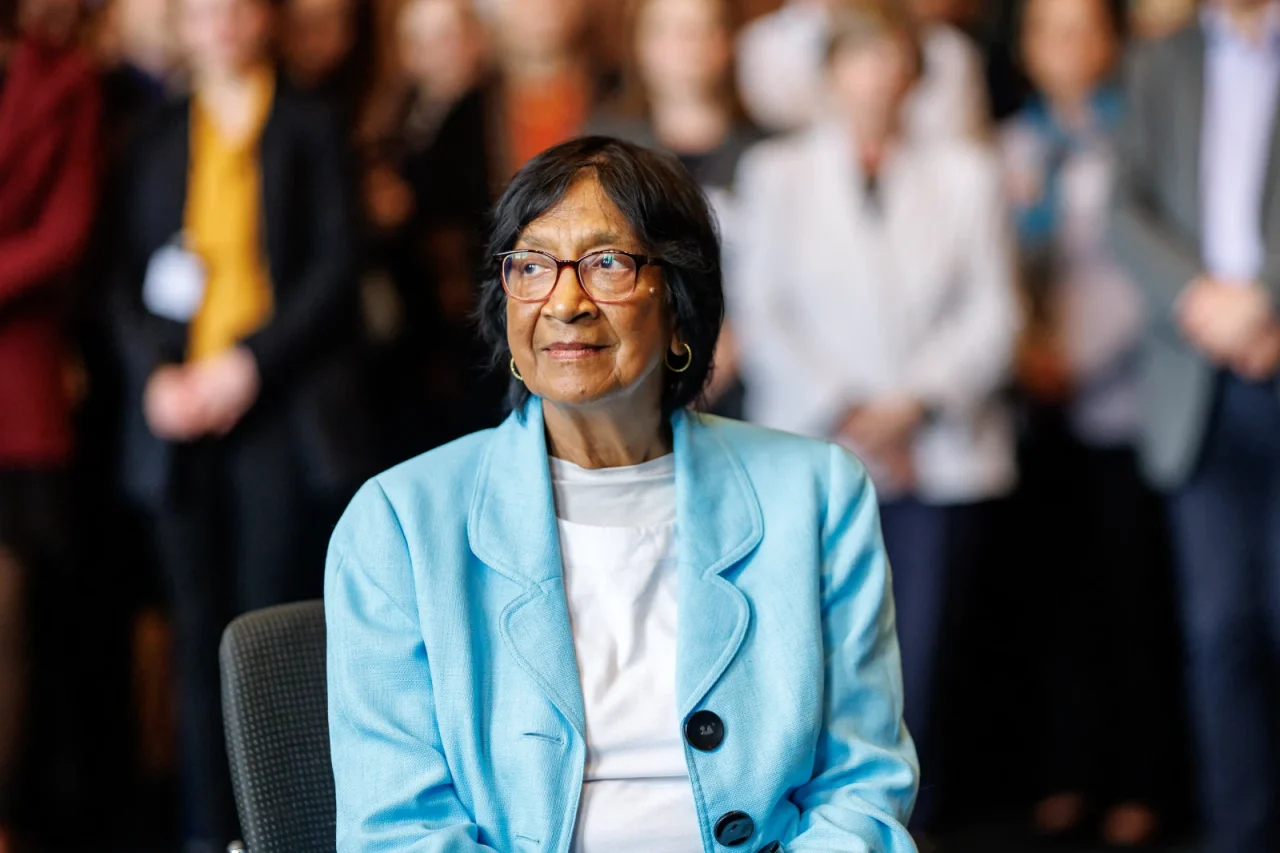
Pillay has repeatedly rebuffed critics who accused her of antisemitism or turning a blind eye to the Hamas attacks in Israel. Under her leadership, the commission also issued reports accusing Hamas of war crimes and violations of international humanitarian law during its Oct. 7, 2023, attack.
In an interview with The Associated Press last year, she recalled how she worked closely with some Jewish lawyers in the fight against apartheid in her native South Africa and was invited to Israel as the U.N. rights chief from 2008 to 2014.
Growing up under the harsh system of segregation influenced Pillay’s interest in human rights and the law. Starting with Mandela’s presidency, South Africa’s government has openly compared the situation faced by nonwhite people during apartheid to the Palestinians’ plight.
“We know too well that our freedom is incomplete without the freedom of the Palestinians,” Mandela said soon after apartheid ended.
The Nobel announcement came at another critical time for Gaza, just two days after the anniversary of the Hamas-led 2023 attack that killed about 1,200 people and sparked the war. Over 74,000 Palestinians have since been killed, with their territory devastated. Saturday marks a year since a fragile ceasefire took effect, while Israeli strikes continue.
Netanyahu wrote on X that the Nobel committee “has lost its moral compass” by awarding its highest honor to “a bigot who built her career around inventing and propagating blood libels against the one and only Jewish state.”
The award was announced less than three weeks before Israel’s election, in which Netanyahu is fighting to stay in power.
Award and sanctions renew focus on Trump’s feud with court
Pillay’s win and the new U.S. sanctions bring renewed attention to Trump’s ongoing feud with the International Criminal Court, where Pillay was a judge from 2003 to 2008.
In a video address, U.S. Secretary of State Marco Rubio said the administration would “ban transactions with this rogue court, cutting off their resources and crippling its ability to operate against us.”
The sanctions block any assets the ICC as an institution has in U.S. jurisdictions and set a six-month timeline for American companies and individuals to wind down any business with the court.
The Nobel committee did not immediately respond to an email seeking comment following Rubio’s announcement.
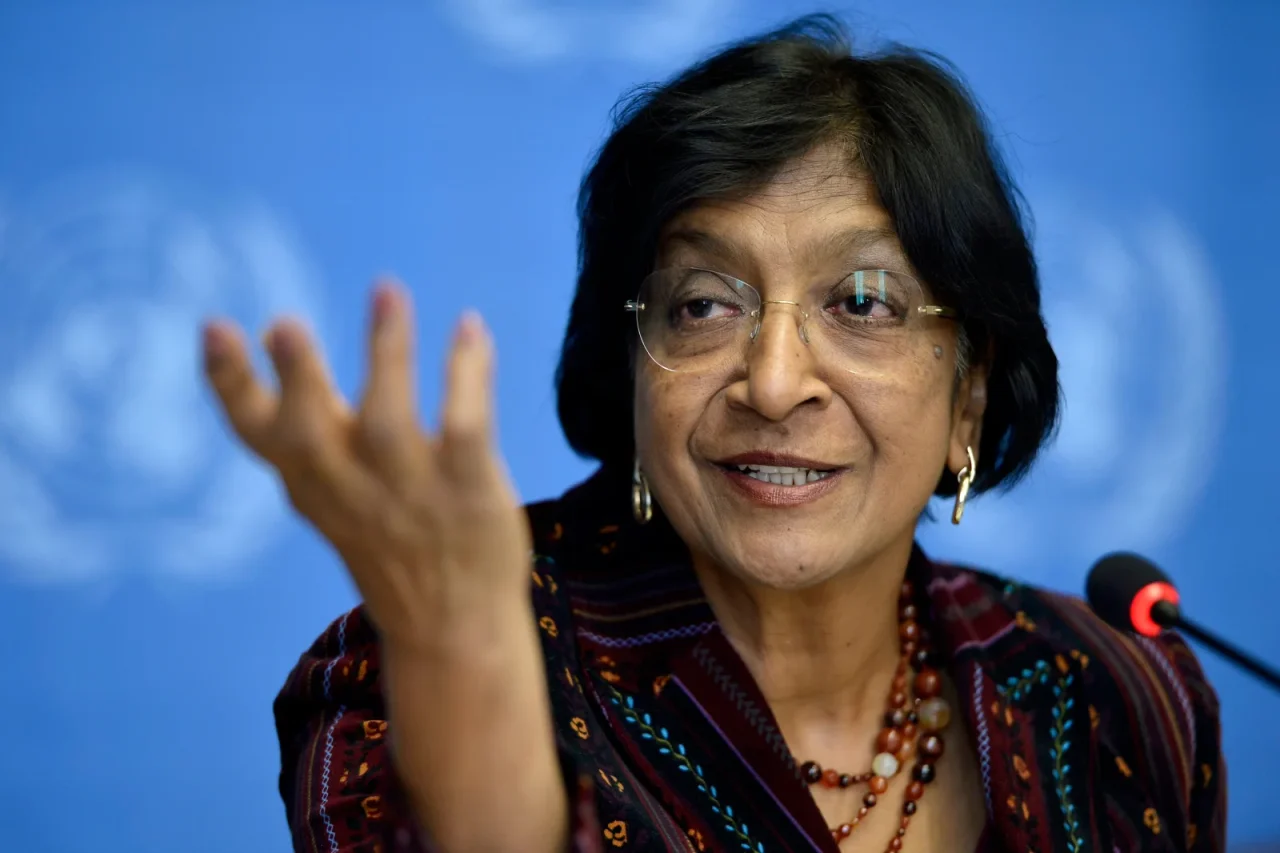
Pillay currently serves as an ad hoc judge at the International Court of Justice, the highest court of the United Nations, in the ongoing genocide case against Myanmar.
When countries do not have a representative on the court’s permanent, 15-judge panel, they can appoint an expert of their choice. Gambia, which launched the proceedings in 2019, selected Pillay when the country accused Myanmar of committing genocide against the Rohingya minority group.
As a young lawyer in apartheid South Africa, part of Pillay’s work involved establishing key rights for political prisoners being held on Robben Island, which included Mandela, who later won the Nobel Peace Prize.
After apartheid ended, Mandela appointed Pillay to be the country’s first nonwhite woman to serve as a High Court judge.
Venezuelan opposition leader won last year
Last year, Venezuelan opposition leader María Corina Machado won the Nobel Peace Prize for her struggle to achieve a democratic transition in the South American nation.
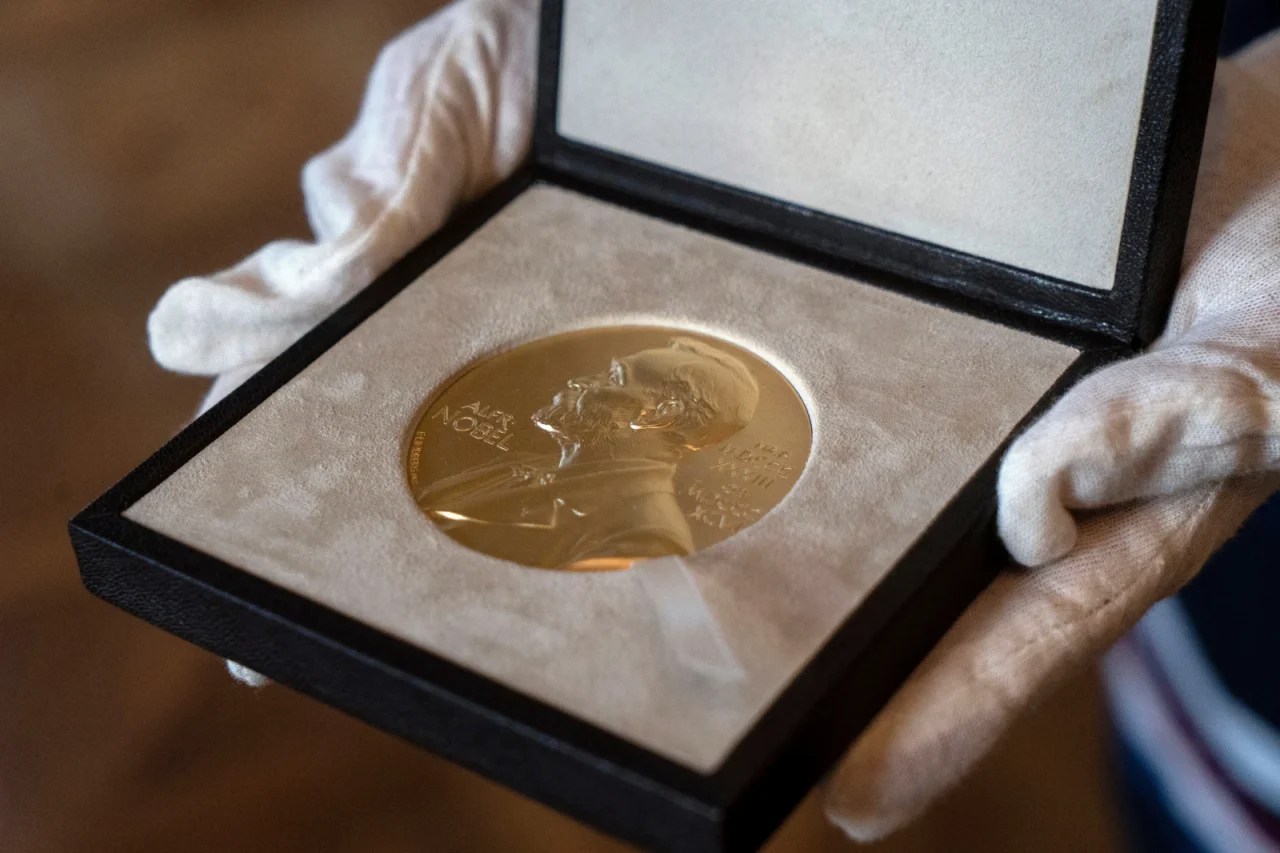
Machado gave Trump her Nobel medal shortly after the United States ousted then-President Nicolás Maduro. But it was largely a symbolic gesture: The Nobel Committee has said the honor itself cannot be transferred.
In Trump’s second term, he has been outspoken about his desire for the Nobel, but has expressed doubts that the committee would ever award him the prize. After Pillay won Friday, Trump alleged without evidence that the prize committee was “crooked,” saying it’s “just another sign of how Norway and all these others are ripping off our country.”
The peace prize follows a week of Nobel announcements
Four of this year’s Nobels were announced earlier this week, in the categories of medicine, physics, chemistry and literature. The Nobel Memorial Prize in Economic Sciences will be announced Monday.
The prize money this year is 12 million Swedish kronor (about $1.2 million), whether for an individual, small group of laureates or organization.
Dazio reported from Berlin, and Keaten reported from Geneva. Associated Press journalists Gerald Imray in Cape Town, South Africa; Ali Swenson in New York; Cara Anna in Jerusalem; Molly Quell and Mike Corder in The Hague, Netherlands; Mark Lewis in Stavanger, Norway; and Collin Binkley in Washington contributed to this report.