By Victor Ghalib Begg
Courtesy Detroit News
As the United States approaches its 250th birthday on July 4, 2026, the nation faces a defining question: how do we celebrate this milestone at a time of deep division?
This semiquincentennial should be more than a commemoration. It should be a moment of reflection—on whether we are truly living up to the ideals of equality, liberty, and justice set forth in the Declaration of Independence.
Religious leaders have a vital role to play in that reflection. Across traditions, faith voices can affirm the moral foundations of our national life—uplifting shared values of peace, justice, dignity, and compassion. At a time of polarization, they can help bridge divides by encouraging civic engagement, pluralism, and a renewed sense of responsibility to one another.
The Detroit Metropolitan area offers a compelling microcosm. Known for its rich religious diversity, it is home to strong interfaith networks that foster dialogue and mutual respect, without requiring communities to surrender their identities. These efforts reflect the enduring aspirations captured in both: “One nation under God” and E pluribus unum, “Out of many, one.
Yet the region also reflects the tensions of our time. Nearby Dearborn is home to one of the nation’s largest Muslim populations, while suburban West Bloomfield hosts a significant Jewish community, including Temple Israel—recently the target of an attack by a man grieving family loss in the war in Lebanon. Even in communities committed to coexistence, global conflicts and domestic divisions can erupt close to home.
In such moments, faith leaders offer a moral voice that transcends politics. Bob Bruttell of the Interfaith Leadership Council of Metropolitan Detroit points to the example of Pope Leo XIV, who has emphasized the human cost of war: “As a pastor, I cannot be in favor of war—too many innocents have died.” The Pope has also called for the humane treatment of immigrants, underscoring dignity as a universal value.
This moral witness echoes a long American tradition. Frederick Douglass, in his 1855 speech, asked, “What to me is your Fourth of July?”—a question that still resonates for those who feel the nation has yet to fulfill its promises. Abraham Lincoln, in the Gettysburg Address, reframed the Civil War as a test of equality, democracy, and national unity—ideals that remain unfinished work.
The founders too understood the importance of working across differences. Rev. Daniel Buttry, a Baptist pastor and a missionary as well as Metro Detroit’s interfaith leader, highlights how evangelist John Leland urged James Madison to include protections for religious liberty in the First Amendment. That principle remains essential today: religious freedom for all is the safeguard against division and the corruption of faith by power.
Rabbi Asher Lopatin of the Jewish Federation of Greater Ann Arbor points to the biblical call (Leviticus 25:10) to “proclaim liberty throughout the land to all its inhabitants.” This vision, echoed in America’s founding, affirms that all people are created equal and deserve dignity and rights. Faith leaders, he argues, must encourage civic participation and help strengthen that commitment.
Imam Steve Elturk of the Islamic Organization of North America and the Imams Council of Michigan draws on the Quran (49:13) teaching that humanity was created from a single origin, Adam and Eve. This idea resonates deeply with the Declaration’s assertion that all men are created equal. America’s diversity in this light reflects a manifestation of Divine wisdom.
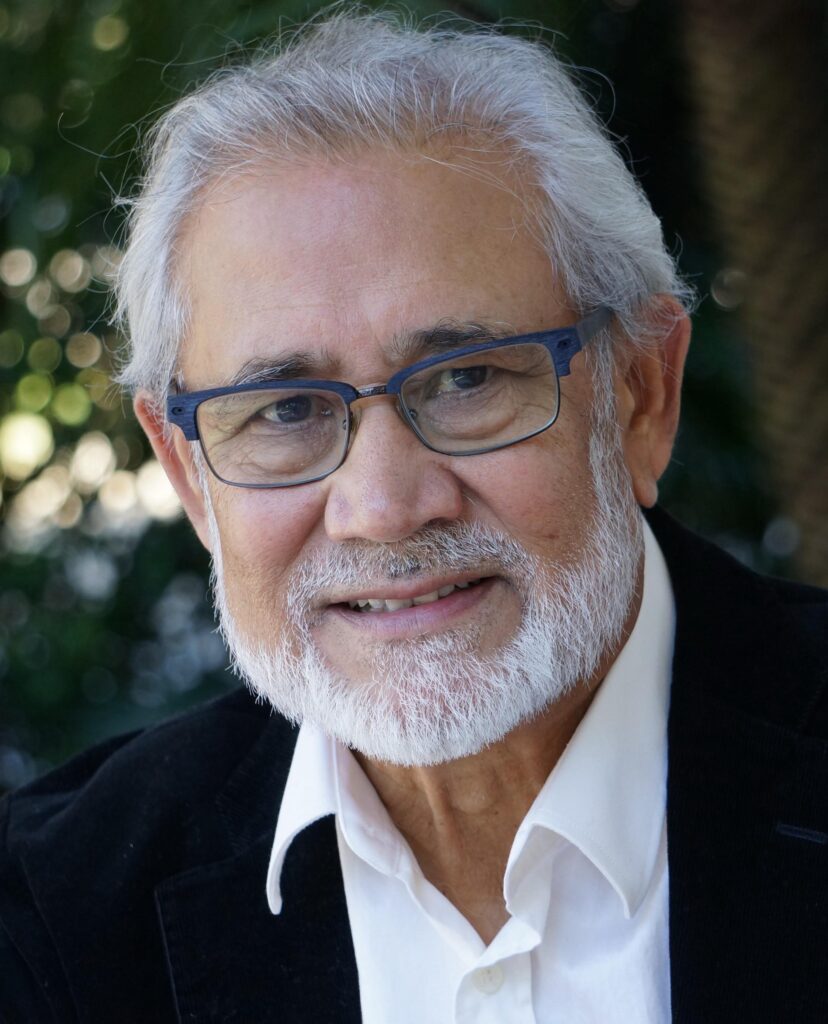
Victor Ghalib Begg,
Former Chair of the Council of Islamic Organizations of Michigan
Past Vice Chair, Michigan Roundtable for Just Communities
Author: Our Muslim Neighbors