Proceedings of the 24th Annual CSID-MPAC Conference
May 15, 2026
Georgetown University, Washington, DC
Organized by the Center for the Study of Islam and Democracy (CSID), the Muslim Public Affairs Council (MPAC) and Middle East Policy Council (MEPC).
Executive Summary
The 24th Annual Conference of the Center for the Study of Islam and Democracy (CSID), organized in partnership with the Muslim Public Affairs Council (MPAC) and the Middle East Policy Council (MEPC), convened policymakers, scholars, journalists, human rights advocates, and civil society leaders to address a question that is at the center of today’s global crises: Can peace, stability, and prosperity endure in the absence of democracy, accountability, and respect for human rights?
Democratic backsliding continues in many parts of the world. Authoritarian governments have become more entrenched. Wars in Gaza, Sudan, Ukraine, and most recently in Iran have exposed the fragility of the international order and raised difficult questions about the future of global governance. At the same time, support for democracy promotion, once a central pillar of Western foreign policy, has come under increasing scrutiny.
Although participants approached these questions from different political, and professional perspectives, a clear theme emerged throughout the day. Speakers challenged the assumption that authoritarian rule produces real stability. Whether discussing Tunisia, Syria, Egypt, Bangladesh, Afghanistan, Libya, or Palestine, participants returned to a similar conclusion: repression may delay political crises, but it rarely resolves them. Systems that deny political participation, suppress dissent, and concentrate power in the hands of few people often appear stable on the surface while deeper grievances continue to grow and accumulate.
Several speakers argued that this lesson has important implications for U.S. foreign policy. For decades, Washington has often favored short-term stability, security cooperation, and geopolitical interests over democratic reform. While this approach has sometimes produced short-term gains, many participants and speakers questioned whether it has served long-term American interests. A recurring criticism throughout the conference was that support for authoritarian allies has frequently undermined democratic development, weakened public trust, fueled instability, and damaged U.S. credibility among the very populations whose partnership Washington seeks.
The conference explored these questions through a series of country case studies. Tunisia illustrated how democratic transitions can unravel when institutions remain fragile and democratic forces become divided. Syria highlighted the immense challenges of rebuilding a society after decades of dictatorship and fourteen years of civil war. Bangladesh offered a more hopeful but still uncertain example of democratic renewal following the collapse of an increasingly authoritarian system. Afghanistan demonstrated the devastating consequences of abandoning democratic and human rights commitments, particularly for women and civil society. Discussions of Palestine and Gaza served as a powerful reminder that security, justice, and human dignity cannot be separated for long without generating further conflict.
Another important thread running through the conference concerned the relationship between Islam and democracy. Several speakers challenged the persistent claim that Islam is inherently incompatible with democratic governance. Drawing on Islamic history, political thought, and contemporary experiences from Tunisia, Indonesia, Malaysia, and elsewhere, they argued that principles such as consultation, accountability, pluralism, equal citizenship, and religious freedom are deeply rooted within Islamic values and traditions. The obstacle, many suggested, is not Islam itself but authoritarian interpretations that seek to monopolize both political and religious authority.
The conference did not produce complete consensus on every issue. Participants differed on questions of sequencing, state-building, foreign intervention, and the pace of democratic change. Yet there was broad agreement on a central proposition: democracy is far more than elections. Durable democratic systems require independent institutions, the rule of law, free media, active civil society organizations, constitutional protections, and a political culture that accepts pluralism and peaceful competition.
By the end of the conference, one overarching conclusion stood out. Stability and democracy should not be viewed as competing objectives. While authoritarian systems may deliver order for a short time, lasting peace and sustainable development depend on governments that derive legitimacy from their citizens and remain accountable to them. The central lesson emerging from the conference was both simple and profound: freedom alone is not enough, but neither is stability without freedom. The most resilient societies are those that combine liberty, accountability, justice, and effective institutions.
Major Themes and Findings
The Limits of Authoritarian Stability
The most consistent theme throughout the conference was a challenge to the long-standing assumption that authoritarian governments are inherently more stable than democratic ones. Speakers from diverse ideological and geographic backgrounds repeatedly questioned this premise, drawing on experiences from several countries.
While authoritarian systems often succeed in suppressing opposition and projecting an image of order, participants noted that they frequently do so by postponing rather than resolving underlying political, economic, and social grievances. The apparent stability of such systems can mask deep public frustration, weak institutions, corruption, and the absence of peaceful mechanisms for political change and reform. When crises eventually emerge, they are often more severe and violent because avenues for reform have long been closed. Several speakers suggested that the upheavals witnessed across the Middle East over the past two decades should be understood not as failures of democracy, but as consequences of prolonged authoritarian rule.
Democracy Requires More Than Elections
Another recurring theme was the distinction between elections and democracy. While free and fair elections remain essential, participants cautioned against viewing them as sufficient indicators of democratic governance.
Across multiple panels, speakers emphasized that durable democracies depend on a broader ecosystem of institutions and norms, including an independent judiciary, professional security services, constitutional safeguards, free media, active civil society organizations, strong political parties, and a political culture that respects pluralism and peaceful competition. Several case studies demonstrated that elections held in the absence of these safeguards can reinforce authoritarian tendencies rather than constrain them.
Islam, Pluralism, and Democratic Governance
The relationship between Islam and democracy was a central focus of the conference and generated some of the most thoughtful discussions of the day. Speakers challenged the persistent claim that democratic governance is somehow foreign to Islamic traditions or incompatible with Muslim societies.
Drawing on Islamic history, political thought, and contemporary experiences from countries such as Tunisia, Indonesia, and Malaysia, participants highlighted concepts such as consultation (shura), equal citizenship, religious freedom, and accountable governance as principles deeply rooted within Islamic intellectual traditions. Several speakers argued that the real tension is not between Islam and democracy, but between democratic values and authoritarian interpretations that seek to monopolize political and religious authority. The discussions demonstrated that Muslim thinkers continue to make important contributions to contemporary debates on pluralism, constitutionalism, and democratic governance.
Human Rights and Security Are Not Competing Goals
A fourth theme that emerged repeatedly was the relationship between security and human rights. Participants broadly rejected the argument that governments must choose between protecting rights and maintaining stability.
Whether discussing Gaza, Syria, Afghanistan, Bangladesh, or other contexts, speakers argued that exclusion, repression, arbitrary governance, and the absence of accountability often generate the very insecurity they are intended to prevent. Human rights were therefore presented not simply as a moral principle, but as practical foundations for long-term stability. Societies that provide avenues for peaceful political participation, protect individual freedoms, and ensure equal treatment under the law are generally better equipped to manage conflict and withstand political shocks than those that rely primarily on coercion.
Rethinking U.S. Engagement with the Muslim World
The conference prompted a broader reassessment of U.S. policy toward the Middle East and the wider Muslim world. Many speakers questioned whether decades of support for authoritarian allies have advanced either democratic values or long-term American interests.
Participants acknowledged the difficult tradeoffs often faced by policymakers but argued that excessive reliance on short-term security partnerships has frequently come at the expense of democratic development and public legitimacy. Several speakers suggested that a more sustainable approach would place greater emphasis on accountable governance, civil society, rule of law, and respect for human rights.
Policy Implications and Recommendations:
These recommendations reflect recurring themes raised throughout the conference and are intended to inform policymakers, democratic reformers, civil society leaders, and international partners.
For U.S. Policymakers:
A recurring concern throughout the conference was the tendency to prioritize short-term stability over long-term democratic development. Participants suggested that a more sustainable approach to the Muslim world would include:
- Integrating democratic governance, accountability, and rule of law into long-term regional engagement strategies.
- Applying human rights principles consistently across allies and adversaries alike, thereby strengthening U.S. credibility and moral leadership.
- Expanding support for independent media, civil society organizations, educational institutions, and other democratic actors.
- Avoiding the assumption that authoritarian governments are inherently more reliable or effective partners.
- Investing more heavily in diplomacy, conflict prevention, institution-building, and economic opportunity as alternatives to predominantly security-driven approaches.
- Supporting inclusive political processes that allow peaceful participation by a broad range of political, religious, and social actors.
For Democratic Reformers and Civil Society Leaders in the Muslim World:
Long-term success depends on building resilient institutions and broad social coalitions capable of defending democratic gains. Participants highlighted the importance of:
- Building alliances across ideological, religious, generational, and political divides around shared democratic principles and values.
- Strengthening democratic institutions, including legislatures, courts, local governments, and independent oversight bodies.
- Protecting constitutional guarantees for fundamental rights and freedoms.
- Investing in civic education, democratic culture, and leadership development, particularly among young people.
- Developing governance agendas that address citizens’ everyday concerns, including economic opportunity, public services, corruption, and social justice.
- Promoting a political culture that values dialogue, compromise, and peaceful competition over exclusion and polarization.
For International Organizations, Foundations, and Donors:
Participants repeatedly noted that local democratic actors often face significant resource and capacity constraints, particularly in periods of political transition or democratic backsliding. International partners can play an important supporting role by:
Strengthening protection mechanisms for human rights defenders, journalists, academics, and civil society leaders operating in restrictive environments.
Expanding long-term support for local civil society organizations, independent research institutions, and grassroots democratic initiatives.
Increasing investment in judicial reform, media freedom, civic participation, and government accountability programs.
Supporting initiatives that strengthen social cohesion, pluralism, and peaceful conflict resolution.
Encouraging transparency, accountability, and good governance through development assistance and partnership programs.
The Limits of Authoritarian Stability
The most consistent theme throughout the conference was a challenge to the long-standing assumption that authoritarian governments are inherently more stable than democratic ones. Speakers from diverse ideological and geographic backgrounds repeatedly questioned this premise, drawing on experiences from several countries.
While authoritarian systems often succeed in suppressing opposition and projecting an image of order, participants noted that they frequently do so by postponing rather than resolving underlying political, economic, and social grievances. The apparent stability of such systems can mask deep public frustration, weak institutions, corruption, and the absence of peaceful mechanisms for political change and reform. When crises eventually emerge, they are often more severe and violent because avenues for reform have long been closed. Several speakers suggested that the upheavals witnessed across the Middle East over the past two decades should be understood not as failures of democracy, but as consequences of prolonged authoritarian rule.
Democracy Requires More Than Elections
Another recurring theme was the distinction between elections and democracy. While free and fair elections remain essential, participants cautioned against viewing them as sufficient indicators of democratic governance.
Across multiple panels, speakers emphasized that durable democracies depend on a broader ecosystem of institutions and norms, including an independent judiciary, professional security services, constitutional safeguards, free media, active civil society organizations, strong political parties, and a political culture that respects pluralism and peaceful competition. Several case studies demonstrated that elections held in the absence of these safeguards can reinforce authoritarian tendencies rather than constrain them.
Islam, Pluralism, and Democratic Governance
The relationship between Islam and democracy was a central focus of the conference and generated some of the most thoughtful discussions of the day. Speakers challenged the persistent claim that democratic governance is somehow foreign to Islamic traditions or incompatible with Muslim societies.
Drawing on Islamic history, political thought, and contemporary experiences from countries such as Tunisia, Indonesia, and Malaysia, participants highlighted concepts such as consultation (shura), equal citizenship, religious freedom, and accountable governance as principles deeply rooted within Islamic intellectual traditions. Several speakers argued that the real tension is not between Islam and democracy, but between democratic values and authoritarian interpretations that seek to monopolize political and religious authority. The discussions demonstrated that Muslim thinkers continue to make important contributions to contemporary debates on pluralism, constitutionalism, and democratic governance.
Human Rights and Security Are Not Competing Goals
A fourth theme that emerged repeatedly was the relationship between security and human rights. Participants broadly rejected the argument that governments must choose between protecting rights and maintaining stability.
Whether discussing Gaza, Syria, Afghanistan, Bangladesh, or other contexts, speakers argued that exclusion, repression, arbitrary governance, and the absence of accountability often generate the very insecurity they are intended to prevent. Human rights were therefore presented not simply as a moral principle, but as practical foundations for long-term stability. Societies that provide avenues for peaceful political participation, protect individual freedoms, and ensure equal treatment under the law are generally better equipped to manage conflict and withstand political shocks than those that rely primarily on coercion.
Rethinking U.S. Engagement with the Muslim World
The conference prompted a broader reassessment of U.S. policy toward the Middle East and the wider Muslim world. Many speakers questioned whether decades of support for authoritarian allies have advanced either democratic values or long-term American interests.
Participants acknowledged the difficult tradeoffs often faced by policymakers but argued that excessive reliance on short-term security partnerships has frequently come at the expense of democratic development and public legitimacy. Several speakers suggested that a more sustainable approach would place greater emphasis on accountable governance, civil society, rule of law, and respect for human rights.
Policy Implications and Recommendations:
These recommendations reflect recurring themes raised throughout the conference and are intended to inform policymakers, democratic reformers, civil society leaders, and international partners.
For U.S. Policymakers:
A recurring concern throughout the conference was the tendency to prioritize short-term stability over long-term democratic development. Participants suggested that a more sustainable approach to the Muslim world would include:
- Integrating democratic governance, accountability, and rule of law into long-term regional engagement strategies.
- Applying human rights principles consistently across allies and adversaries alike, thereby strengthening U.S. credibility and moral leadership.
- Expanding support for independent media, civil society organizations, educational institutions, and other democratic actors.
- Avoiding the assumption that authoritarian governments are inherently more reliable or effective partners.
- Investing more heavily in diplomacy, conflict prevention, institution-building, and economic opportunity as alternatives to predominantly security-driven approaches.
- Supporting inclusive political processes that allow peaceful participation by a broad range of political, religious, and social actors.
For Democratic Reformers and Civil Society Leaders in the Muslim World:
Long-term success depends on building resilient institutions and broad social coalitions capable of defending democratic gains. Participants highlighted the importance of:
- Building alliances across ideological, religious, generational, and political divides around shared democratic principles and values.
- Strengthening democratic institutions, including legislatures, courts, local governments, and independent oversight bodies.
- Protecting constitutional guarantees for fundamental rights and freedoms.
- Investing in civic education, democratic culture, and leadership development, particularly among young people.
- Developing governance agendas that address citizens’ everyday concerns, including economic opportunity, public services, corruption, and social justice.
- Promoting a political culture that values dialogue, compromise, and peaceful competition over exclusion and polarization.
For International Organizations, Foundations, and Donors:
Participants repeatedly noted that local democratic actors often face significant resource and capacity constraints, particularly in periods of political transition or democratic backsliding. International partners can play an important supporting role by:
- Expanding long-term support for local civil society organizations, independent research institutions, and grassroots democratic initiatives.
- Increasing investment in judicial reform, media freedom, civic participation, and government accountability programs.
- Supporting initiatives that strengthen social cohesion, pluralism, and peaceful conflict resolution.
- Encouraging transparency, accountability, and good governance through development assistance and partnership programs.
- Strengthening protection mechanisms for human rights defenders, journalists, academics, and civil society leaders operating in restrictive environments.
Opening Remarks
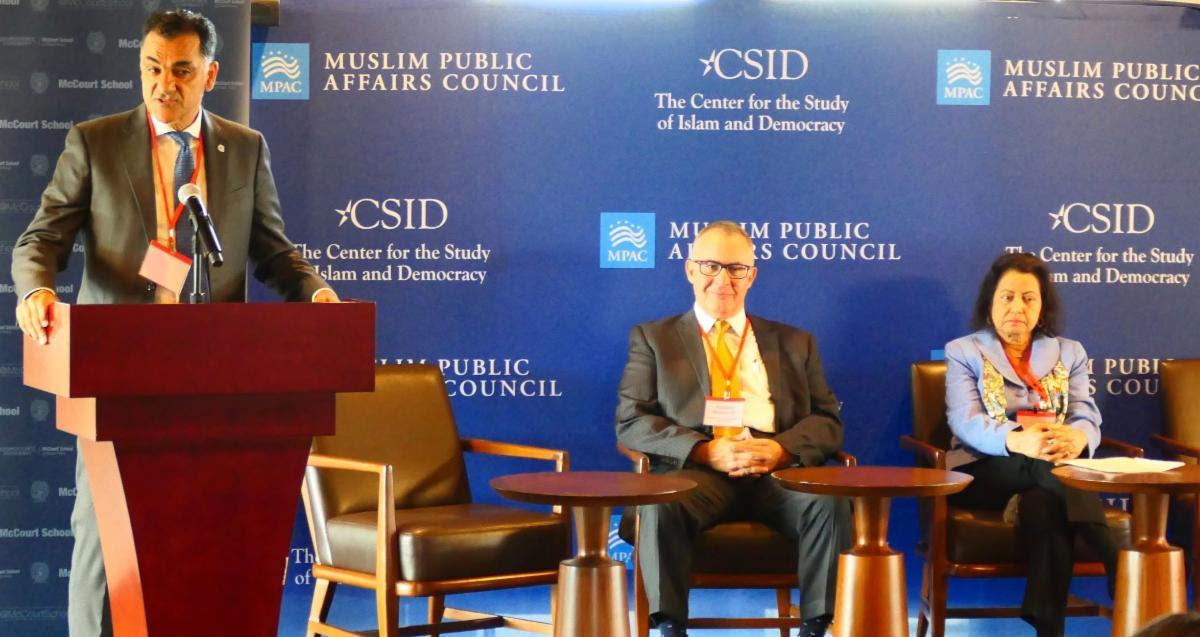
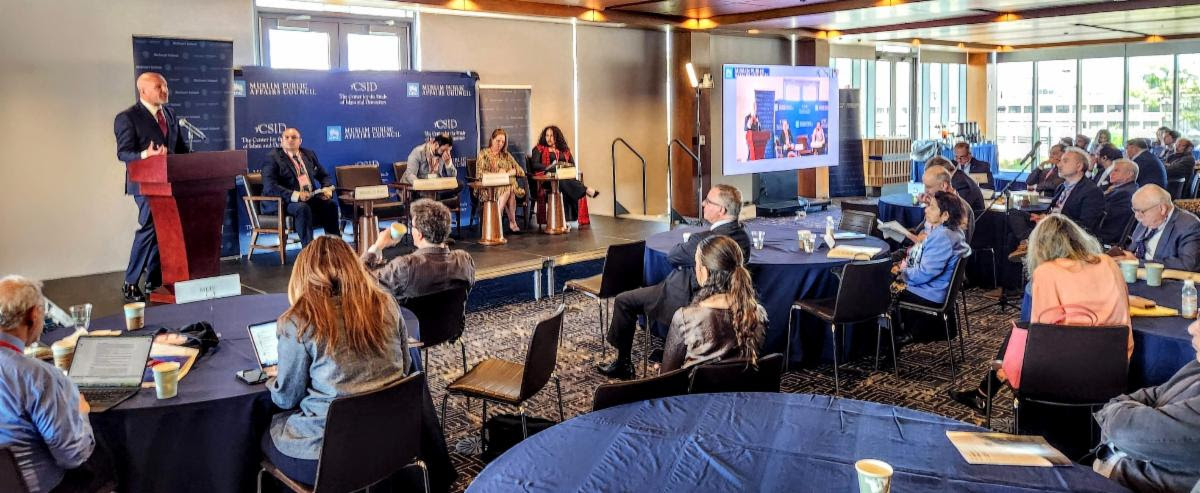
Welcoming participants on behalf of the conference organizers, Dr. Radwan Masmoudi highlighted the timeliness of the conference theme and the significance of bringing together policymakers, scholars, human rights advocates, and civic leaders from diverse backgrounds and perspectives. He noted that debates over democracy, governance, and political reform have entered a critical new phase, both globally and within the Muslim world. The purpose of the conference, he explained, was not only to examine these challenges but also to explore practical pathways toward greater freedom, justice, accountability, and peaceful political change.
Prof. Asma Afsaruddin, Chair of CSID’s Board of Directors, situated the conference within CSID’s longstanding mission of promoting dialogue between Islamic and democratic political thought. Reflecting on more than two decades of work by the organization, she observed that the conference’s central question, whether global stability can be sustained without democracy, accountability, and human rights, has become increasingly urgent. She warned that democratic institutions are under pressure in many parts of the world, including countries long considered stable democracies, such as the US, Europe, and India. Lasting peace and stability, she argued, depend on meaningful political participation, respect for human rights, and governments that remain accountable to their citizens.
In his remarks, MPAC President Salam Al-Marayati connected the conference theme to both American and Islamic traditions. Reflecting on the approaching 250th anniversary of the U.S. Declaration of Independence, he noted that the promise of freedom has often been applied unevenly, both within the United States and in American foreign policy. Drawing on the Medina Charter and foundational Islamic teachings, he argued that principles such as pluralism, consultation, shared citizenship, religious freedom, and accountable governance are deeply embedded in the Islamic tradition. He challenged efforts to portray Islam and democracy as incompatible and called for a more consistent commitment to human dignity, political inclusion, and democratic reform. Freedom and justice, he concluded, are not only moral imperatives but also essential foundations for lasting peace and stability.
Opening Keynote Addresses
Why Americans Must Defend Democracy at Home and Abroad
Rep. Pramila Jayapal (D-WA)
In the conference’s opening keynote address, Congresswoman Pramila Jayapal argued that the challenges facing democracy abroad cannot be separated from the challenges confronting democracy within the United States itself. Drawing parallels between democratic backsliding in different regions of the world, she warned that democratic institutions, civil liberties, and the rule of law are facing mounting pressure both domestically and internationally.
Jayapal expressed concern about the concentration of executive power, the weakening of democratic checks and balances, growing attacks on immigrants and minority communities, and the resurgence of anti-Muslim prejudice in American political discourse. She argued that efforts to stigmatize religious communities or restrict political participation ultimately weaken democratic institutions and undermine the principles upon which democratic societies depend.
At the international level, she questioned the inconsistency of U.S. support for democracy and human rights, noting that short-term interests have too often overshadowed commitments to freedom, accountability, and representative government. Sustainable democratic progress, she suggested, requires greater consistency between the values the United States promotes abroad and the practices it upholds at home.
Despite these concerns, Jayapal delivered an optimistic message. Drawing on historical examples from the United States and around the world, she emphasized that democratic advances have rarely come from governments alone. Rather, they have been achieved through organized, persistent, and largely nonviolent civic action. She concluded by urging citizens to remain engaged in public life and to embrace what she described as the “discipline of hope”, the belief that democratic progress remains possible even during periods of profound uncertainty.
What Does It Mean to Defend Human Rights in an Age that Normalizes Colonial Tendencies and Authoritarianism?
Bahey El Din Hassan, Founder and Director, Cairo Institute for Human Rights Studies
Delivering the conference’s opening policy keynote, Bahey El Din Hassan offered a sobering assessment of the state of democracy and human rights in the contemporary international system. Speaking from more than four decades of experience in the Arab human rights movement, he argued that the world is witnessing a growing erosion of international norms, democratic values, and commitments to human rights.
Hassan contended that authoritarianism is advancing at a time when many of the institutions designed to defend international law and protect fundamental freedoms appear increasingly weakened. He pointed to the selective application of human rights principles by major powers and the inconsistent support for democratic movements across the Middle East and North Africa (MENA) as factors that have contributed to widespread public disillusionment.
Returning repeatedly to the question of stability, Hassan challenged the notion that repression, military rule, or centralized authority can provide a durable foundation for peace and development. The repeated failures of authoritarian projects across the region, whether nationalist, military, or ideological, demonstrate the limits of governance based on coercion rather than consent. While such systems may survive for short periods, he argued, they ultimately fail to address citizens’ demands for dignity, freedom, participation, and accountability.
At the same time, Hassan cautioned against relying on external actors to drive democratic change. International support for democracy, he noted, has often been selective, inconsistent, and subordinate to geopolitical considerations. For this reason, he argued that the future of democracy in the Arab world will depend primarily on the ability of democratic actors themselves to build broad coalitions capable of transcending ideological, political, and social divisions.
One of the strongest themes of his address was the need for greater cooperation among democratic forces, including secular, liberal, leftist, and Islamist actors. Lasting democratic progress, he suggested, will require a shared commitment to pluralism, human rights, equal citizenship, and the peaceful transfer of power.
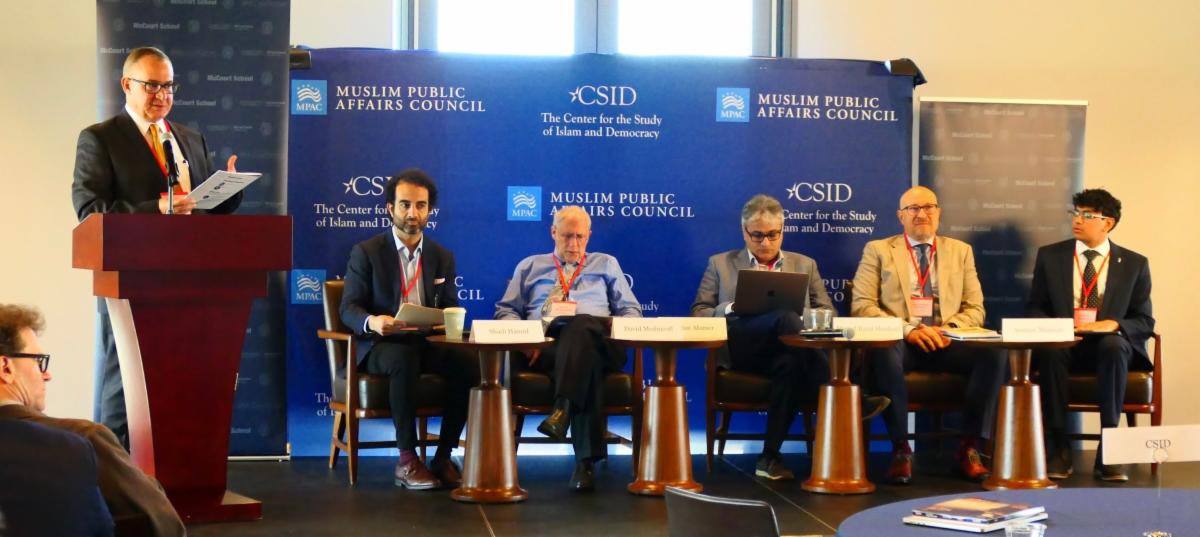
Democratic Backsliding and Stalled Reform: The Case for Democracy and Peaceful Reform
Moderator: Dr. Radwan A. Masmoudi (CSID and MPAC)
The conference’s first panel addressed a question that resurfaced throughout the day: Does authoritarianism provide greater stability than democracy, or does it merely postpone deeper political crises? Drawing on experiences from the Middle East, South Asia, and the international system, panelists examined the causes of democratic decline, the persistence of authoritarian governance, and the prospects for peaceful political reform.
Shadi Hamid Georgetown University
Shadi Hamid opened the discussion by challenging what he described as Washington’s long-standing “stability-first” approach to the Middle East. For decades, he argued, U.S. policymakers have often assumed that authoritarian governments are better positioned to preserve order, while democratic participation risks empowering irresponsible or destabilizing actors.
Hamid contended that the record of the past several decades points in the opposite direction. Authoritarian systems may appear stable for long periods, but their stability is often fragile because it rests on repression rather than legitimacy. The Arab Spring and the collapse of several long-standing regimes demonstrated how quickly apparently stable political orders can unravel when citizens are denied meaningful political participation.
While acknowledging that democratic transitions can generate short-term uncertainty and policy challenges, Hamid maintained that the region’s recurring cycles of conflict, extremism, and state failure are not the result of excessive democracy but of its prolonged absence. He urged policymakers to adopt a longer time horizon and to view democratic governance not as a threat to stability but as its most reliable foundation.
Prof. David Mednicoff University of Massachusetts Amherst
David Mednicoff broadened the discussion beyond individual countries to examine the crisis facing the contemporary international order. He argued that institutions created after World War II were intended to promote collective security, peaceful dispute resolution, and equal application of international law. Yet many observers today increasingly perceive those principles as being applied selectively.
Rather than a truly rules-based order, Mednicoff suggested that the international system is often viewed as a “rules-biased” order, one in which power frequently determines how rules are interpreted and enforced. This perception has contributed to growing skepticism toward international institutions and weakened confidence in the global commitment to democracy and human rights.
At the same time, Mednicoff saw opportunities for renewal. He pointed to the growing role of regional organizations, civil society networks, and transnational partnerships in addressing global challenges. Restoring legitimacy to international governance, he argued, will require stronger institutions, greater consistency in the application of international law, and broader participation by both state and non-state actors.
Sultan Alamer Middle East Policy Council and Harvard University
Sultan Alamer offered a historical perspective on the trajectory of democratic thought in the Arab world. Challenging the common assumption that democracy is an imported Western concept, he argued that constitutionalism, representative government, and political reform have deep roots in modern Arab political history.
Alamer noted that by the early 2000s democracy had become a broadly shared aspiration across much of the Arab political spectrum. Liberals, Islamists, nationalists, civil society organizations, and even some governments increasingly embraced the language of reform, participation, and accountability. The Arab Spring emerged from this broader democratic moment rather than appearing suddenly, or unexpectedly.
Yet the democratic momentum of that period ultimately collided with a broader global democratic recession. Authoritarian resurgence, tighter control over media and public space, regional conflict, and declining international support for reform contributed to growing public disillusionment. While acknowledging these setbacks, Alamer argued that no alternative model has successfully addressed the region’s persistent governance challenges. Reviving democratic aspirations, he suggested, remains essential for building accountable and inclusive political systems.
Murad Batal Al-Shishani Journalist and Researcher
Drawing on debates that emerged after 9/11, Murad Al-Shishani approached democracy primarily as a mechanism for managing political conflict rather than as an abstract ideal. He revisited long-standing discussions about whether political participation can reduce the appeal of extremism and violent movements.
Using examples from Algeria, Egypt, Tunisia, Turkey, and Western democracies, Al-Shishani argued that exclusion and the absence of legitimate political channels often contribute to radicalization. Democratic institutions, when functioning properly, create opportunities for competition, dissent, and political expression without resorting to violence.
At the same time, he cautioned against simplistic assumptions. Democracy, he noted, does not automatically eliminate extremist ideologies, which can emerge even within established democratic societies. The critical challenge is building institutions capable of managing social and political conflict through the rule of law. Sustainable stability, he concluded, depends on creating systems in which disagreements are settled through ballots rather than bullets.
Amar Mansuri University of Florida
Amar Mansuri examined the relationship between democratic legitimacy, social inclusion, and long-term stability through the contemporary experience of India. While India is often cited as a democratic success story and an increasingly important strategic partner for the United States, Mansuri argued that growing concerns about minority rights and democratic backsliding deserve closer attention.
He pointed to developments such as the revocation of Kashmir’s autonomy and the Citizenship Amendment Act as examples of policies that have raised concerns among large segments of India’s Muslim population. Governments may retain legal authority and maintain public order, he noted, while simultaneously losing legitimacy among important sectors of society.
Mansuri argued that sustainable stability depends not only on economic growth or electoral success but also on equal citizenship, social inclusion, and public trust in state institutions. He urged policymakers to view democratic legitimacy as a strategic asset rather than a secondary concern, emphasizing that durable partnerships ultimately rest on governments that remain accountable to all their citizens.
Panel Discussion Highlights
The discussion that followed revealed broad agreement that democratic decline has contributed significantly to instability in many regions of the world. Panelists repeatedly challenged the notion that authoritarian governance offers a reliable path to peace or prosperity, arguing instead that repression often suppresses conflicts that later reemerge in more dangerous forms.
At the same time, participants acknowledged the difficulties associated with democratic transitions. Several speakers noted that elections alone are insufficient and that successful democratic systems require strong institutions, independent courts, free media, and a culture of political pluralism. The conversation also highlighted the growing disconnect between democratic ideals and contemporary international politics, particularly when major powers apply democratic principles selectively.
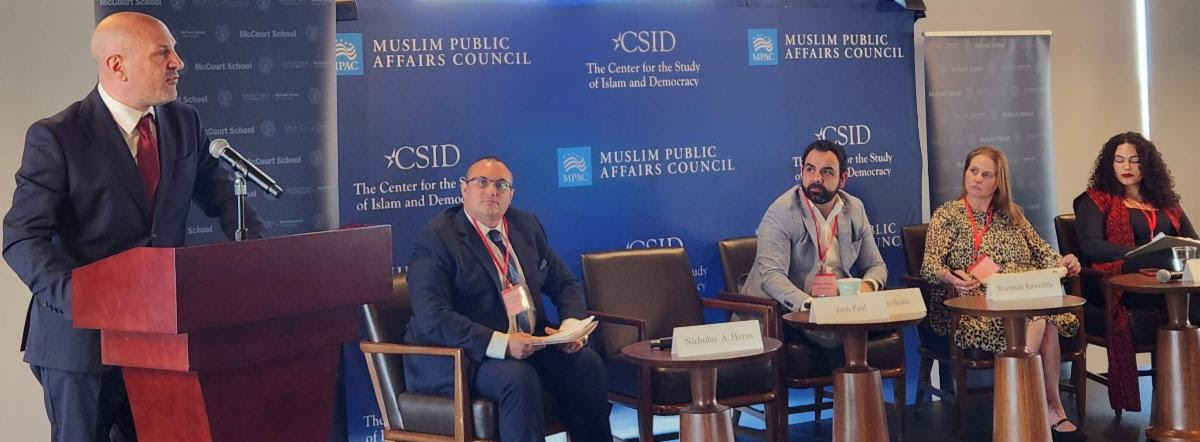
Israel, Gaza, and Palestine: The Future of Peace in the Middle East
Moderator: Nicholas A. Heras (Middle East Policy Council)
The second panel turned to one of the most pressing and contentious issues in contemporary international affairs: the war in Gaza and its implications for the future of peace, stability, and governance in the Middle East. While the panelists approached the issue from different professional and disciplinary perspectives, they shared a common concern that current policies have focused heavily on managing conflict rather than resolving its underlying causes. Questions of political legitimacy, human rights, accountability, displacement, and international law featured prominently throughout the discussion.
Several speakers argued that security, justice, and political inclusion are deeply interconnected and that lasting stability will remain elusive unless the underlying political grievances at the heart of the conflict are addressed.
Josh Paul Co-Founder, A New Policy
Josh Paul situated the Israeli-Palestinian conflict within a broader regional and international context. He argued that the crisis cannot be understood separately from long-standing patterns in U.S. foreign policy, Israeli security doctrine, and the persistence of authoritarian governance across much of the Middle East.
Paul described the United States as a global power increasingly focused on preserving an unsustainable status quo through military partnerships and security arrangements rather than real political reforms and inclusive governance. He suggested that this approach has often prioritized short-term stability while neglecting the deeper drivers of conflict.
Turning to Israel, Paul argued that Israeli security policy has become heavily dependent on deterrence and overwhelming force, reflecting a persistent sense of insecurity that military superiority alone has been unable to overcome. While such policies may achieve temporary tactical objectives, he questioned whether they can produce lasting peace.
Paul maintained that sustainable stability requires confronting the political roots of the conflict, including the denial of Palestinian rights, the absence of meaningful accountability, and the failure to achieve a just political settlement. He concluded by calling for a more balanced U.S. approach that places greater emphasis on diplomacy, human rights, and representative governance as foundations for long-term regional stability.
Omar Shakir Democracy for the Arab World Now (DAWN)
Omar Shakir argued that the war in Gaza should be viewed not only as a humanitarian catastrophe but also as part of a broader regional struggle over accountability, democracy, and the rule of law.
He contended that decades of impunity surrounding the occupation of Palestinian territory have weakened international legal norms and contributed to a wider erosion of respect for international humanitarian law. According to Shakir, practices that became normalized in the Palestinian context, including large-scale displacement, attacks on civilian infrastructure, and the selective application of legal standards, have increasingly influenced conflicts elsewhere in the region.
Shakir also noted that shifting regional crises and geopolitical tensions have often diverted international attention from ongoing developments in Gaza and the West Bank, allowing patterns of abuse and exclusion to persist. He argued that the Palestinian struggle is closely linked to broader demands for dignity, political participation, and accountable governance throughout the Arab world.
For Shakir, meaningful progress toward peace requires more than humanitarian relief or diplomatic management. It requires accountability, respect for international law, and a willingness by both regional and international actors to challenge policies that perpetuate injustice and undermine democratic aspirations.
Shannon Rockcliffe Rutgers University
Drawing on her work as an anthropologist, Shannon Rockcliffe examined the conflict through the lens of political legitimacy and everyday lived experience. Rather than focusing primarily on diplomacy or security policy, she asked how political decisions are experienced by ordinary people living under conditions of conflict, displacement, and uncertainty.
Rockcliffe described what she called “governance by exception,” a system in which normal expectations of democratic accountability, due process, and equal protection are suspended or selectively applied in the name of security. While institutions may continue to function administratively, she argued, their existence alone does not generate legitimacy if people experience governance as arbitrary, unequal, or unaccountable.
Returning repeatedly to the experiences of families and communities affected by conflict, Rockcliffe emphasized that stability cannot be measured solely through ceasefires, aid deliveries, or institutional continuity. Lasting stability depends on whether people believe that political institutions are fair, responsive, and accountable.
She concluded that security and human rights should not be viewed as competing priorities. Rather, accountability, equal treatment, and public trust are essential components of sustainable peace.
Lein Sultan UNRWA-USA
Lein Sultan focused on the human consequences of conflict, offering a sobering account of the humanitarian crisis facing Palestinian refugees, particularly in Gaza. Speaking both as a professional advocate and as the granddaughter of Nakba survivors, she connected the present crisis to a longer history of displacement that continues to shape Palestinian lives more than seven decades later.
Sultan described the devastating impact of war on civilians, including mass displacement, widespread food insecurity, the collapse of public services, and the growing psychological toll on children and families. She highlighted the enormous challenges facing humanitarian organizations attempting to provide assistance amid continuing violence, damaged infrastructure, and restrictions on access.
She also emphasized the critical role played by UNRWA in providing education, healthcare, psychosocial services, and humanitarian support to millions of Palestinian refugees across Gaza, the West Bank, Jordan, Lebanon, and Syria. Yet she stressed that humanitarian assistance, however essential, cannot substitute for a real and lasting political solution.
Speaking on the anniversary of the Nakba, Sultan concluded with a reminder that lasting peace will require addressing the underlying causes of displacement and conflict. Humanitarian relief can save lives, she noted, but only a just and durable political settlement can secure dignity, rights, and long-term stability.
Panel Discussion Highlights:
The discussion that followed centered on the relationship between security, justice, and political legitimacy. Panelists broadly agreed that attempts to manage the conflict through military deterrence, humanitarian assistance, or crisis containment alone have failed to produce lasting peace.
Several participants argued that the recurring cycles of violence reflect deeper political failures, including the absence of accountability, unequal application of rights, and the continued marginalization of Palestinian aspirations. Others emphasized the importance of strengthening international legal norms and rebuilding public confidence in institutions tasked with protecting civilians and resolving disputes peacefully.
Luncheon Keynote Address and Roundtable Discussion
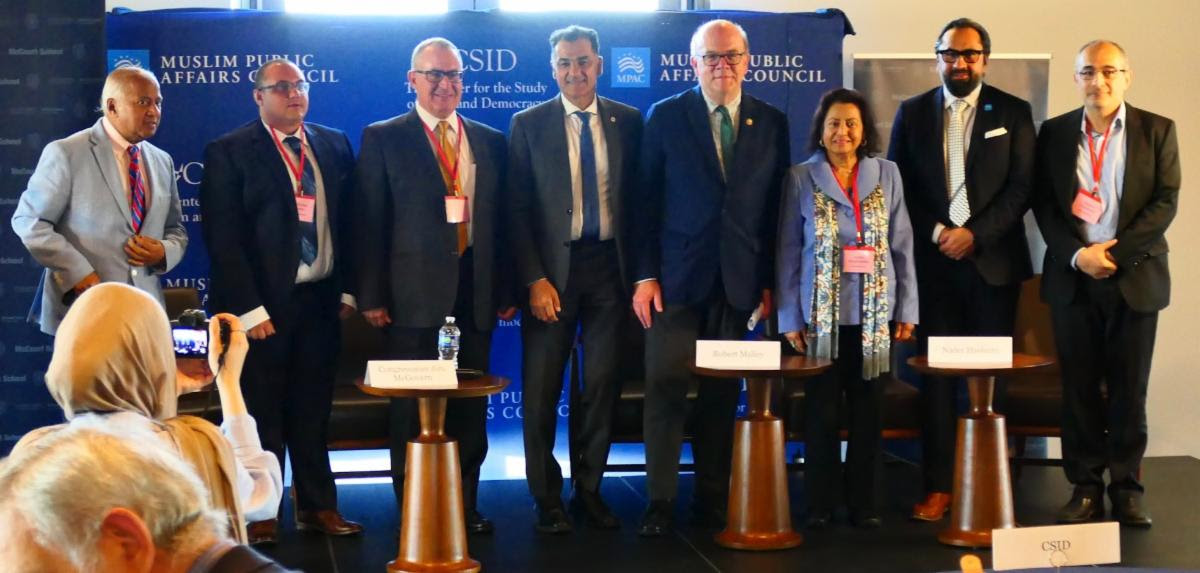
Rep. Jim McGovern (D-MA) Co-Chair, Tom Lantos Human Rights Commission
Democracy and U.S. Foreign Policy: Aligning Strategy with Values in a Changing World
Delivering the conference’s luncheon keynote, Congressman Jim McGovern offered a passionate defense of human rights, democratic accountability, and international law as essential components of effective American foreign policy. Rejecting the notion that values and interests are inherently in conflict, he argued that policies rooted in repression, impunity, and short-term geopolitical calculations ultimately undermine both moral credibility and long-term strategic objectives.
McGovern focused particular attention on the war in Gaza and its implications for America’s standing in the world. He warned that continued U.S. support for policies associated with widespread civilian suffering has raised difficult questions about Washington’s commitment to the principles it advocates globally. The selective application of human rights standards, he argued, weakens American credibility and fuels perceptions of double standards in international affairs.
Throughout his remarks, McGovern emphasized the importance of consistency, both in defending human rights and in upholding international law. He expressed concern about growing attacks on international institutions, including the United Nations and the International Criminal Court, arguing that a functioning international system requires strong institutions capable of holding all actors accountable.
McGovern concluded that democracy, congressional oversight, respect for international law, and the protection of fundamental freedoms are not obstacles to stability but essential foundations for a more peaceful, secure, and just international order.
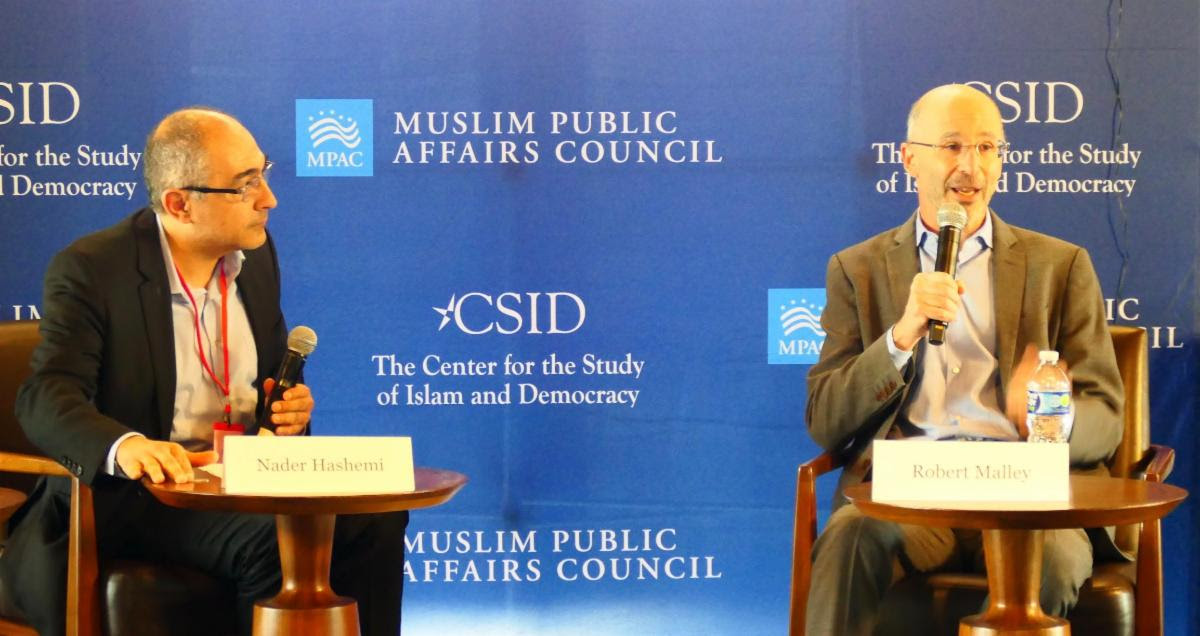
From a Tragic, Forgotten Crisis to an Unlawful, Unnecessary War: U.S. Middle East Policy in the Age of Iran and Israel-Palestine
Conversation Between Nader Hashemi and Robert Malley
The luncheon discussion between Nader Hashemi and Robert Malley explored the consequences of supporting authoritarian regimes, the future of U.S. engagement in the Middle East, and the ongoing crises involving Iran and Palestine.
Rather than treating the recent war with Iran as an isolated event, Malley argued that it should be understood within the broader context of decades of American and Western policies toward the Middle East. He suggested that dominant narratives portraying Iran, Palestinians, and the wider region primarily through the lens of extremism and instability have helped normalize sanctions, military interventions, and coercive approaches to conflict management. In his view, these policies have often failed to address underlying political realities while contributing to cycles of mistrust and confrontation.
Discussing Iran, Malley observed that the conflict produced contradictory outcomes. While the war imposed significant costs on Iran, it also reinforced the belief among many Iranian policymakers that nuclear deterrence may ultimately be necessary for national security. At the same time, he cautioned against simplistic assumptions regarding Iran’s future nuclear intentions, noting that pursuing such a path would carry substantial risks and uncertainties.
The discussion then turned to Palestine and the future of the Israeli-Palestinian conflict. Malley argued that U.S. policy has frequently prioritized short-term benefits and domestic political considerations over questions of justice, accountability, and equal rights. As a result, he suggested, Israeli leaders have faced limited incentives to alter existing policies. Nevertheless, he pointed to changing public attitudes within the United States, particularly among younger Americans, as a potentially significant factor that could reshape future debates and policy choices.
Throughout the conversation, Hashemi repeatedly returned to a central question: why successive American administrations continue to support authoritarian allies despite widespread recognition of the long-term risks. Malley acknowledged the contradiction, noting that many policymakers understand the dangers associated with supporting autocratic regimes but remain constrained by immediate political pressures and short-term strategic considerations.
Meaningful policy change, Malley argued, is unlikely to originate solely from governments or foreign policy institutions. Rather, it will depend on sustained civic engagement, public advocacy, and democratic mobilization capable of changing the political incentives that shape policymaking in Washington.
Discussion Highlights:
Several themes emerged from the exchange. First, the participants suggested that the recent war with Iran reflects the continuation of long-standing assumptions in U.S. Middle East policy rather than a fundamentally new strategic doctrine. Second, military force and economic sanctions have become increasingly normalized instruments of statecraft despite their mixed record in producing durable political outcomes. Third, growing generational shifts within the United States may be reshaping debates surrounding Israel-Palestine, democracy, and human rights in ways that could eventually influence policy.
More broadly, the conversation reinforced one of the conference’s central conclusions: foreign policies that prioritize short-term stability while neglecting accountability, political inclusion, and democratic legitimacy often contribute to the very crises they seek to prevent.
Country Case Studies: The Future of Democracy in Libya, Syria, Bangladesh, and Afghanistan
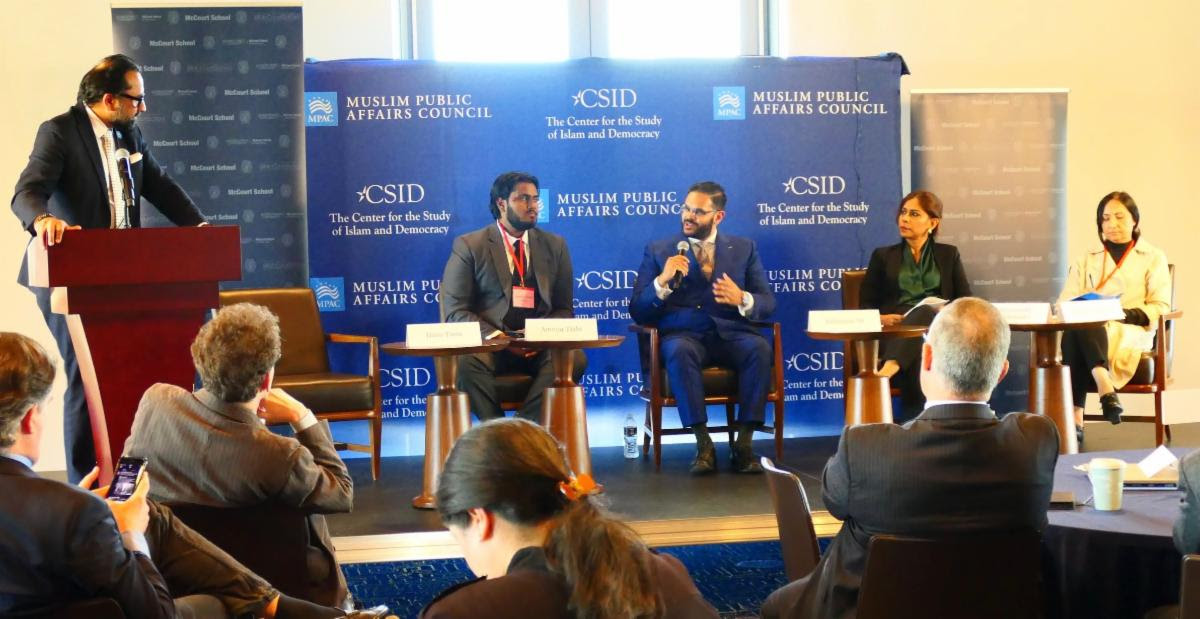
Moderator: Haris Tarin (MPAC)
The third panel shifted the discussion from broad questions of democratic theory and international policy to the practical realities of political transition and state-building. Through case studies from Libya, Syria, Bangladesh, and Afghanistan, panelists examined the opportunities and challenges that emerge when societies confront authoritarian rule, political collapse, or democratic reversal.
Despite the significant differences among the four countries, a common theme emerged throughout the discussion. Removing an authoritarian ruler, ending a civil war, or holding an election does not automatically produce democracy. Sustainable democratic governance requires time to build legitimate institutions, public trust, accountable leadership, and a democratic culture that has the capacity to manage political conflict peacefully.
Ammar Elahi Executive Director, Muslim Action Coalition
Using Libya as a case study, Amar Elahi examined the relationship between legitimacy, institution-building, and political stability. He argued that the apparent stability of Muammar Gaddafi’s rule concealed deep structural weaknesses. Political authority rested largely on personal power, patronage networks, and fragmented security arrangements rather than functioning state institutions capable of surviving leadership change.
Elahi noted that the 2011 popular revolution succeeded in removing the regime but failed to establish a coherent strategy for rebuilding the state. The resulting vacuum allowed competing militias, rival governments, and external actors to fill the space once occupied by centralized authority. Libya’s subsequent instability, he suggested, illustrates the dangers of focusing on regime change without equal attention to institutional development.
More broadly, Elahi challenged the idea that stability can be sustained through coercion alone. Durable peace requires institutions that enjoy public legitimacy, resolve disputes peacefully, and provide citizens with confidence in the political process. He argued that Libya’s future will depend on strengthening civil institutions, reforming the security sector, improving governance of national resources, and fostering inclusive political participation. Democracy and stability, he concluded, should be understood as mutually reinforcing rather than competing objectives.
Mir Salman Ali Senior Advisor for International Affairs, AK Party in Türkiye
Mir Salman Ali focused on Syria’s post-conflict future following the collapse of the Assad regime in 2024. Reflecting on more than fourteen years of war, he emphasized the resilience of Syrian civil society, the Syrian diaspora, and regional actors who continued to advocate for change despite widespread international pessimism about the country’s future.
Ali argued that Syria’s experience raises difficult questions about democratic sequencing in post-conflict environments. While acknowledging the importance of democratic governance, he cautioned against assuming that immediate elections or the rapid introduction of Western political models necessarily provide the best path forward for societies emerging from prolonged conflict.
Instead, he proposed what he described as an approach of “order with conditional accountability.” Under this framework, stabilization, reconstruction, economic recovery, and national integration would precede a full democratic transition while remaining subject to measurable standards of accountability. He suggested that regional actors such as Türkiye, Qatar, and Saudi Arabia could play important roles in supporting Syria’s recovery and reconstruction, while international engagement should focus on benchmarks related to minority protections, sanctions relief, national reconciliation, and counter-extremism efforts.
Ali concluded that democracy is most likely to succeed when it is built upon functioning institutions, public trust, and a minimum level of security rather than introduced into a political vacuum.
Shamarukh Mohiuddin Founder and President, The Bangladesh Project
Shamarukh Mohiuddin examined Bangladesh’s ongoing democratic transition following the popular uprising that brought an end to fifteen years of increasingly authoritarian rule. She described the February 2026 elections and the accompanying approval of the “July Charter” reform agenda as potentially transformative moments in the country’s political development.
The elections restored an important measure of political legitimacy, she argued, but Bangladesh now faces a more difficult challenge: transforming democratic aspirations into durable institutions. The reform agenda includes efforts to strengthen judicial independence, improve electoral integrity, limit executive power, expand civil liberties, and enhance government accountability.
Mohiuddin cautioned, however, that many of the legal, political, and security structures that enabled authoritarianism remain intact. Restrictions on free expression, weak accountability mechanisms, and entrenched political practices continue to threaten democratic consolidation. Bangladesh’s future, she argued, will depend not simply on changing political leadership but on reforming the institutions that made authoritarian governance possible in the first place.
Her remarked that democratic transitions succeed not when elections are held, but when institutions become strong enough to protect rights, constrain power, and earn public trust.
Belquis Ahmadi Human Rights Lawyer and Former Senior Program Officer, U.S. Institute of Peace
Belquis Ahmadi provided a sobering assessment of conditions in Taliban-controlled Afghanistan. Challenging claims that democracy, women’s rights, and human rights are foreign concepts imposed from outside, she emphasized that Afghans themselves have struggled for political participation, education, equality, and constitutional governance for generations.
Ahmadi described the Taliban’s governing structure as highly centralized and deeply authoritarian, with power concentrated in a small religious leadership that has systematically dismantled constitutional protections, independent institutions, and legal safeguards. She detailed the severe restrictions imposed on women and girls, journalists, civil society organizations, and religious minorities, arguing that Afghanistan today represents one of the world’s most restrictive political environments.
While acknowledging the complexity of international engagement with Afghanistan, Ahmadi warned against normalizing Taliban rule without meaningful reforms. Doing so, she argued, risks legitimizing systematic violations of fundamental rights and abandoning millions of Afghans who continue to seek dignity, opportunity, and political participation.
She called on democratic governments, international organizations, and Muslim-majority countries to maintain pressure for accountability while supporting Afghan citizens, particularly women and civil society activists, who continue to advocate for a more inclusive and representative future.
Panel Discussion Highlights:
The discussion that followed highlighted both the diversity of democratic experiences and the common challenges confronting societies emerging from authoritarianism, conflict, or political transition.
There was broad agreement that elections alone do not sustain democracy. Effective democratic governance requires institutions capable of constraining power, protecting rights, resolving disputes peacefully, and maintaining public confidence. The conversation also underscored the importance of local ownership in democratic transitions, with several speakers cautioning against externally imposed solutions that fail to account for domestic realities.
Taken together, the panel reinforced the fact that democratic change is a process and not a single event. It is a long-term process of building legitimate institutions, expanding political participation, and creating systems of governance that citizens view as representative, effective and accountable.
Islam, Pluralism, and Governance: Is Sharia Law Compatible with Democracy?
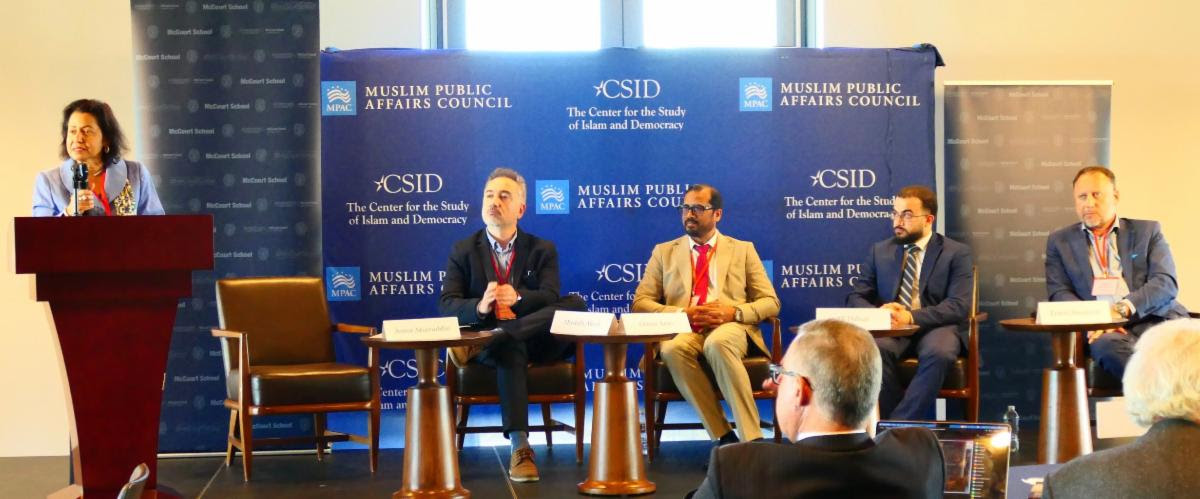
Moderator: Asma Afsaruddin (CSID)
The final panel addressed one of the most enduring and frequently misunderstood questions in contemporary political discourse: whether Islam and Sharia are compatible with democracy, pluralism, and modern constitutional governance. While public debates often portray Islam and democracy as inherently in tension, the panelists challenged that assumption, arguing that the real divide is not between Islam and democracy but between authoritarian and pluralistic interpretations of religion and politics.
Drawing on Islamic history, political thought, contemporary case studies, and the experiences of Muslim-majority societies, the discussion explored how Islamic values can coexist with democratic institutions, human rights, religious freedom, and accountable governance.
Mustafa Akyol Senior Fellow, Cato Institute
Mustafa Akyol examined the relationship between Islam, Sharia, democracy, and religious freedom, arguing that many contemporary conflicts arise from authoritarian interpretations of religion rather than from Islamic teachings themselves. Drawing on Islamic history, Ottoman legal traditions, and modern political debates, he emphasized that authentic religious commitment must be voluntary and cannot be imposed through state coercion.
Central to his argument was the Quranic principle that there should be “no compulsion in religion.” Akyol maintained that religious freedom is not a concession to modernity but a value deeply rooted within the Islamic tradition. He distinguished between Sharia as a moral and ethical framework that guides individual conduct and Sharia as a state-enforced ideological project. Confusing these two concepts, he argued, has contributed to many contemporary misunderstandings.
Using examples from Afghanistan, Syria, and other Muslim societies, Akyol criticized systems that merge religious authority with unchecked political power. At the same time, he expressed cautious optimism that emerging political models in parts of the Muslim world may offer more pluralistic alternatives. He concluded that democracy, human rights, and religious freedom are fully compatible with Islam when religion is understood as a matter of conscience rather than state coercion.
Dr. Ermin Sinanović Executive Director, Center for Islam in the Contemporary World, Shenandoah University
Ermin Sinanović challenged the widespread assumption that political Islam has failed or entered a post-Islamist era. Drawing primarily on the experiences of Indonesia and Malaysia, he argued that many Islamist movements have achieved influence not through revolutionary change or electoral dominance but through gradual institutional integration.
Introducing the concept of “embedded Islamism,” Sinanović explained how Islamic values and policy preferences have become incorporated into state institutions, educational systems, regulatory structures, and public policy while operating within democratic political frameworks. Rather than replacing democratic competition, these developments have often occurred through democratic processes themselves.
He noted that in both Indonesia and Malaysia, mainstream political parties increasingly adopted policies and priorities originally associated with Islamist movements, demonstrating how democratic systems can absorb and institutionalize religious values without abandoning pluralism or electoral competition.
Sinanović argued that Southeast Asia offers an important alternative to both authoritarian secularism and revolutionary Islamism. The experiences of these countries suggest that democratic governance, peaceful transfers of power, effective state institutions, and a meaningful public role for religion can coexist within stable and pluralistic political systems.
Ali Dabaj Harvard University
Ali Dabaj explored the democratic dimensions of Islamic political thought through the work of the late Lebanese Shi’a scholar Muhammad Mahdi Shamsuddin. He argued that discussions of Shi’a political theory are often dominated by Iran’s doctrine of Wilayat al-Faqih (Guardianship of the Jurist), obscuring alternative traditions that are far more compatible with democracy and pluralism.
Drawing on Shamsuddin’s writings, Dabaj presented a vision of governance rooted in parliamentary democracy, equal citizenship, political participation, and civic integration. Shamsuddin rejected both theocratic rule and sectarian exclusivism, advocating instead for what he described as a “civil state” that respects religious values while remaining accountable to citizens.
A particularly important aspect of Shamsuddin’s thought, Dabaj noted, was his emphasis on relationships among citizens rather than simply between citizens and the state. Democratic stability depends not only on institutions but also on the willingness of diverse communities to view one another as legitimate partners in a shared political project.
Dabaj concluded that civic engagement, mutual respect, and resistance to sectarian polarization are essential safeguards against democratic decline. These lessons, he suggested, remain relevant not only for the Middle East, but also for democracies around the world grappling with rising polarization and identity-based politics.
Dr. Omair Anas Ankara Yıldırım Beyazıt University
Omair Anas examined the intellectual evolution of Tunisian thinker and statesman Rached Ghannouchi, presenting him as one of the most significant contemporary Muslim advocates of democracy, pluralism, and constitutional governance.
Anas argued that Ghannouchi departed from earlier Islamist thinkers who often viewed modernity and democracy with suspicion. Instead, Ghannouchi developed an approach that sought to reconcile Islamic values with democratic institutions, human rights, political pluralism, and constitutional rule.
Central to Ghannouchi’s thought, Anas explained, is the concept of the dawla madaniyya, or civil state, which offers an alternative both to authoritarian secularism and to theocratic governance. Ghannouchi consistently emphasized freedom of conscience, political participation, the protection of individual rights, and the importance of civil society as safeguards against authoritarianism.
Anas highlighted Ghannouchi’s willingness to engage in dialogue, compromise, and coalition-building, even when such positions attracted criticism from some Islamist circles. He argued that Ghannouchi’s intellectual and political legacy represents one of the most developed contemporary models of Muslim democracy and offers important lessons for societies seeking to reconcile faith, freedom, and democratic governance.
Panel Discussion Highlights:
The panel broadly rejected the claim that Islam is inherently incompatible with democracy, pluralism, or human rights. The participants emphasized that many contemporary tensions arise not from Islamic teachings themselves, but from efforts to monopolize religious authority and concentrate political power.
The discussion also highlighted the distinction between religion as a source of ethical guidance and religion as an instrument of state coercion. Across multiple case studies, speakers argued that democratic governance is strengthened, not weakened, when religious belief remains voluntary and political authority remains accountable.
Taken together, the panel suggested that the future debate is no longer whether Islam and democracy can coexist, but how Muslim societies can continue developing political models that combine faith, freedom, pluralism, and effective governance. In that sense, the panel emphasized that democracy, accountability, and human dignity are not foreign concepts imposed upon Muslim societies, but values that can draw support from both universal principles and rich traditions within Islamic thought itself.
Closing Keynote Address and Lifetime Achievement Award Presentation
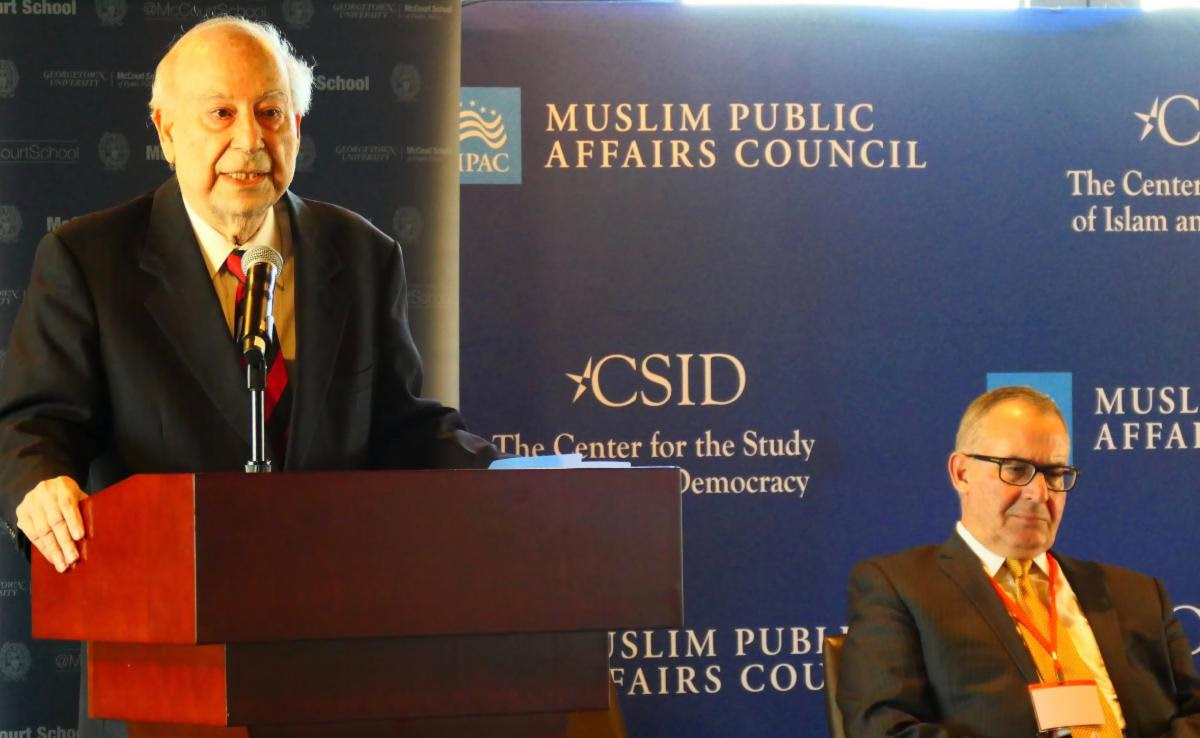
Humanity at a Crossroads: Islam, Democracy, and the Future of World Order
Ambassador Akbar Ahmed Ibn Khaldun Chair of Islamic Studies, American University
In a wide-ranging and deeply reflective closing keynote, Ambassador Akbar Ahmed placed the conference’s discussions within a broader historical and civilizational context. Drawing on decades of scholarship, field research, and public service, he argued that humanity is living through a period of profound uncertainty in which old political assumptions are being challenged while new global realities remain unsettled.
Ahmed suggested that the central question facing the world today extends beyond geopolitics, military competition, or economic power. At its core, he argued, lies a more fundamental challenge: whether humanity can build a global order grounded in justice, dignity, and mutual respect rather than domination, exclusion, and fear.
Reflecting on the rise and decline of empires, the changing position of Muslim societies in global affairs, and the growing tensions between security and human rights, Ahmed warned against the dehumanization that increasingly shapes political discourse around the world. Drawing on examples from Islamic history, American democratic traditions, and his anthropological work across diverse societies and continents, he emphasized the importance of empathy, dialogue, and genuine understanding across religious, cultural, and political divides.
A recurring theme throughout his remarks was that democracy cannot be sustained by institutions alone. Democratic governance requires an ethical foundation rooted in justice, inclusion, compassion, and respect for human dignity. Without those values, political systems risk becoming hollow and disconnected from the societies they seek to serve.
Ahmed concluded with a call to scholars, policymakers, religious leaders, and civil society actors to continue building bridges across communities and nations. At a moment when polarization and conflict appear to be deepening in many parts of the world, he argued that the pursuit of democracy must remain connected to a broader commitment to human dignity, coexistence, and the common good.
Presentation of the CSID-MPAC Lifetime Achievement Award
Dr. John L. Esposito
University Professor of Religion and International Affairs, Georgetown University, and founder of the Alwaleed Center for Muslim Christian Understanding
Following Ambassador Ahmed’s keynote, CSID and MPAC presented their Lifetime Achievement Award to Dr. John L. Esposito in recognition of his extraordinary contributions to the study of Islam, interfaith understanding, and public education over more than five decades.
In his acceptance remarks, Esposito reflected on the remarkable transformation of the field during his career. When he began his academic work, the study of contemporary Islam occupied only a marginal place within universities, government institutions, and public discourse. Through decades of scholarship, teaching, institution-building, and public engagement, he helped establish Islamic studies as a major academic field while challenging stereotypes and misconceptions about Islam and Muslim societies.
Esposito emphasized that many of the issues discussed throughout the conference, including democracy, human rights, religious freedom, and pluralism, remain among the defining challenges of our time. He noted that democratic values must be defended not only internationally, but also within established democracies that increasingly face polarization, distrust, and pressures on democratic institutions.
Reflecting on the responsibilities of scholars and citizens alike, Esposito stressed the importance of education, civic engagement, coalition-building, and public participation in democratic life. Progress, he argued, is not inevitable; it depends on the willingness of individuals and institutions to remain actively engaged in the pursuit of justice and the defense of democratic principles.
His remarks served as both a reflection on a distinguished career and a reminder that the work of advancing democracy, mutual understanding, and human dignity remains unfinished. Esposito’s message echoed one of the central conclusions of the conference itself: democracy and pluralism are sustained not by rhetoric alone, but by the long-term commitment of citizens, scholars, policymakers, and civil society leaders willing to defend them.
Concluding Reflections:
The conference concluded on a note of cautious optimism. While participants expressed deep concern about democratic backsliding, armed conflict, rising authoritarianism, and the erosion of international norms, they also pointed to the resilience of democratic ideals and the continued efforts of citizens, scholars, and civil society movements around the world to advance freedom, accountability, and human dignity.
Across a wide range of perspectives and country experiences, a common message emerged. Stable and prosperous societies cannot be built solely through military power, coercion, or authoritarian control. Lasting peace depends on accountable institutions, political inclusion, respect for rights, and public legitimacy. Democracy remains imperfect and often difficult, but the conference repeatedly affirmed that it offers the most promising framework for managing political differences peacefully and building a more just and sustainable future.